Equipment reliability is not an operational luxury for contractor fleets — it is the precondition for project delivery. When vehicles fail in the field, the consequences extend far beyond the cost of the repair: crews are idled, project timelines slip, contract commitments are threatened, and the emergency repair premium compounds the financial impact of a failure that scheduled maintenance could have prevented. For utility contractors, construction companies, and municipal fleets operating across Tampa, Orlando, Lakeland, St. Petersburg, Kissimmee, and Winter Garden, preventive maintenance contractor fleets Florida programs are the most direct and cost-effective strategy for controlling these risks.
Florida's operating environment adds specific urgency to preventive fleet maintenance. The state's sustained high temperatures, coastal humidity, and active storm season create equipment degradation rates that consistently exceed national averages — compressing service intervals, accelerating fluid breakdown, and intensifying the consequences of deferred maintenance. Contractor fleets operating under standard manufacturer interval guidelines in Florida routinely experience failures that would not occur if service schedules were calibrated to Florida's actual conditions.
CRANETEC provides structured preventive maintenance contractor fleets Florida programs through mobile service units that travel directly to contractor facilities, fleet staging yards, and active job sites. Rather than requiring vehicles to leave the property for shop service, CRANETEC delivers the full scope of preventive maintenance — oil and filter service, hydraulic system inspection, electrical diagnostics, safety checks, and fluid monitoring — at the contractor's location on a scheduled, coordinated basis.
This article covers what effective preventive maintenance programs include, why they matter specifically for Florida's contractor fleet environment, which services are most critical, which fleet types benefit most, and how mobile service delivery makes structured maintenance practical for fleets of all sizes operating across the state.

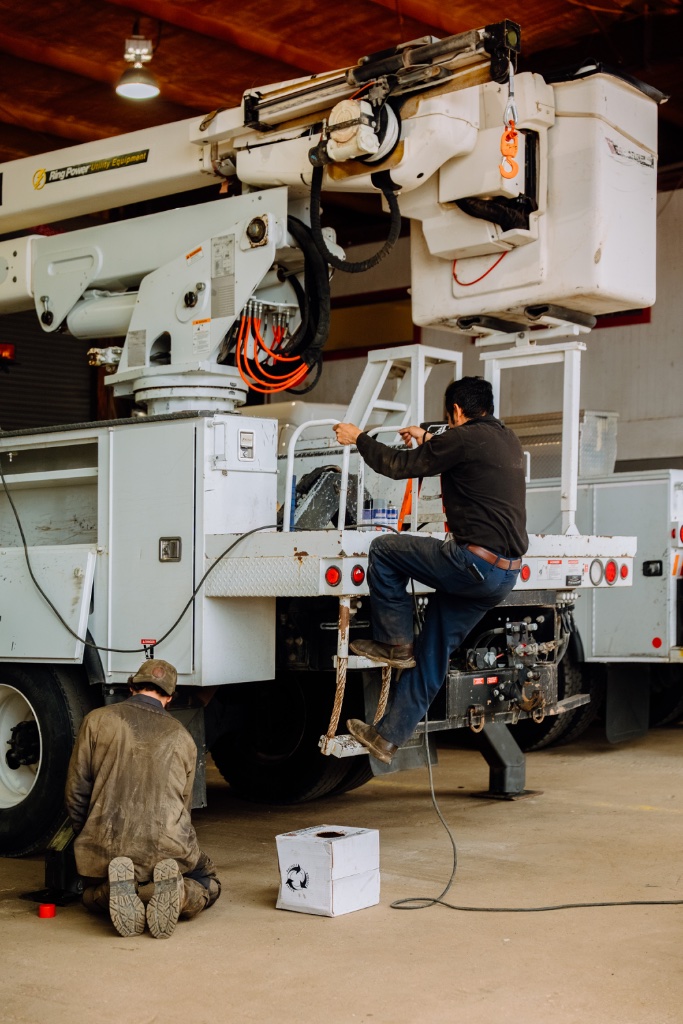
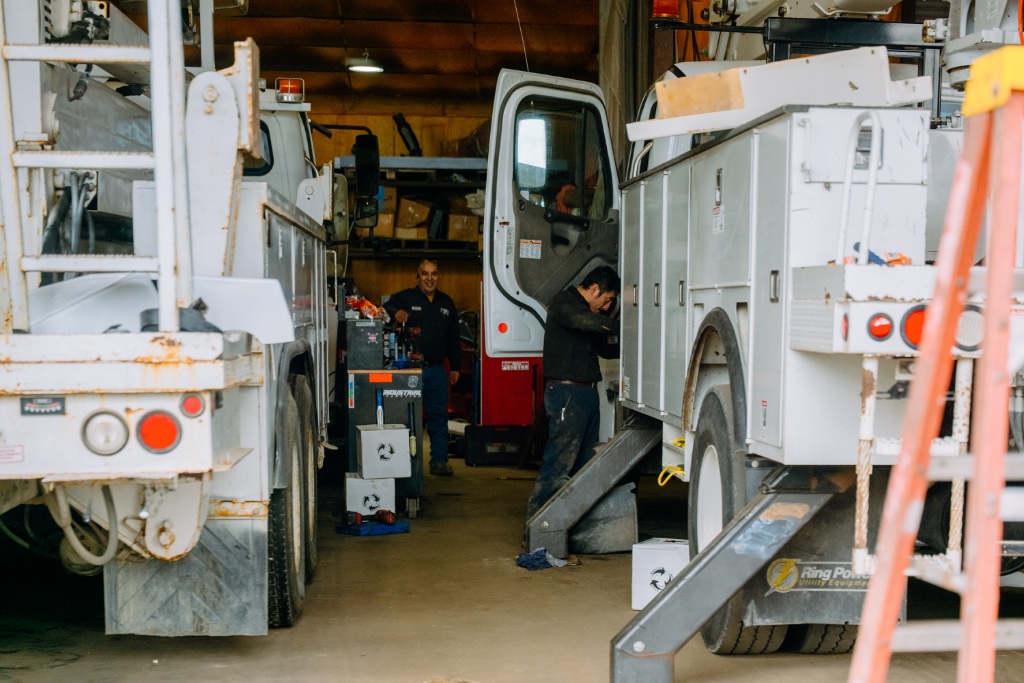
CRANETEC mobile service technician conducting preventive maintenance on a contractor fleet vehicle at a Florida job site.
What Is Preventive Fleet Maintenance?
Preventive fleet maintenance is a systematic, schedule-driven approach to equipment care that performs service, inspections, and component replacement at defined intervals — before failures occur. Unlike reactive maintenance, which responds to breakdowns after they happen, preventive programs keep equipment operating within design parameters and identify developing problems when they are still minor and inexpensive to correct.
For contractor fleet vehicles, preventive maintenance programs typically operate on multiple service tiers: daily operator pre-operation checks; periodic scheduled service events at defined hour or mileage intervals; and annual or semi-annual comprehensive inspections covering all vehicle systems. Each tier serves a distinct function in the overall reliability framework.
Scheduled service programs establish the cadence for fluid changes, filter replacements, lubrication services, and component inspections. These intervals are determined by manufacturer recommendations as a baseline and adjusted upward — shorter intervals — to reflect actual operating conditions. In Florida's high-heat environment, where fluid breakdown rates are elevated relative to national norms, applying manufacturer intervals calibrated for temperate climates produces under-serviced equipment and accelerated wear.
Routine maintenance encompasses the hands-on service events where technicians perform fluid changes, inspect components, and evaluate overall equipment condition. Each service event is an opportunity to assess the fleet's condition beyond the specific service being performed — and experienced technicians identify developing issues during routine service that would otherwise go undetected until failure.
Equipment reliability is the measurable output of an effective preventive program. Fleets with consistent, properly calibrated preventive maintenance programs demonstrate significantly lower unplanned failure rates, longer equipment service lives, and more predictable maintenance cost profiles than fleets operating without structured programs — regardless of equipment age or brand.
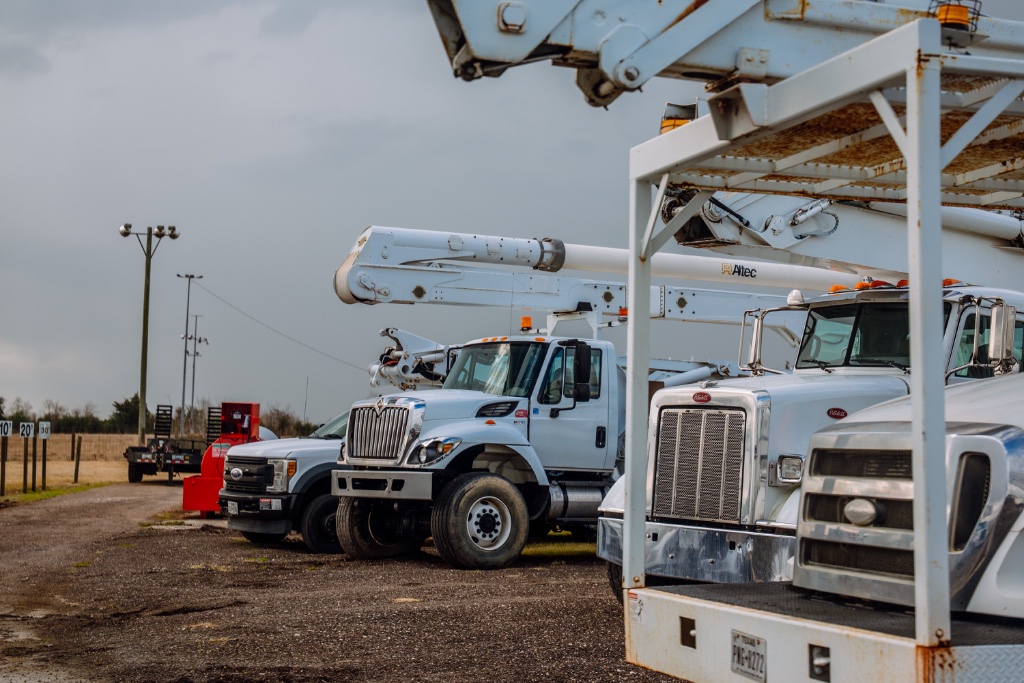
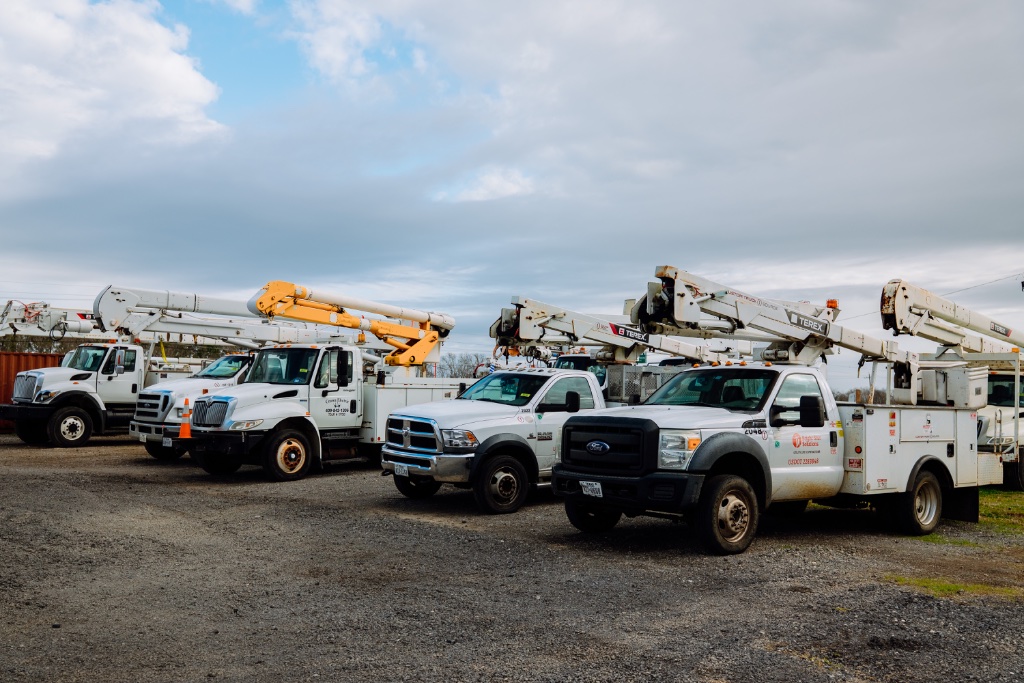
Why Preventive Maintenance Is Critical for Contractor Fleets
The business case for fleet maintenance programs Florida contractors operate is built on four interconnected pillars: downtime reduction, equipment lifespan extension, safety compliance, and total cost management. Each delivers independent value; together, they create a maintenance economics argument that consistently justifies preventive program investment for any contractor operating meaningful fleet utilization in Florida.
Reduced Equipment Downtime
Unplanned equipment failures are significantly more disruptive and expensive than scheduled maintenance events. When a vehicle fails on a job site, the costs are immediate: crew idle time while waiting for repair, equipment unavailability that may require rental substitutes, project schedule impact, and the premium cost of emergency repair service. Preventive maintenance contractor fleets Florida programs reduce unplanned failure rates by maintaining equipment within operating specifications and identifying degrading components before they fail. Studies across commercial fleet industries consistently show 30–50% reductions in unplanned breakdowns under structured preventive programs compared to reactive-only approaches.
Longer Equipment Lifespan
Equipment that receives consistent preventive maintenance demonstrably outlasts equipment operated under reactive-only maintenance strategies. Clean engine oil at appropriate viscosity reduces internal wear; properly maintained hydraulic fluid prevents cylinder and pump degradation; lubricated bearing and pivot surfaces operate within design tolerances rather than accelerating wear under metal-to-metal contact. For Florida contractors managing high-value assets like bucket trucks, digger derricks, and specialized utility equipment, extending equipment service life by even two to three years represents capital savings that far exceed the total cost of the preventive maintenance program responsible for that extension.
Safety Compliance and Regulatory Requirements
Florida contractor fleets operating aerial devices, bucket trucks, and utility equipment are subject to OSHA and ANSI A92.2 inspection requirements that mandate annual inspection of aerial devices, daily operator pre-operation inspections, and documentation maintenance. Utility clients awarding contract work in Florida increasingly require current inspection documentation as a qualification condition for contractor equipment — and units that cannot produce current documentation are rejected at project staging, regardless of operational urgency. Preventive maintenance programs that incorporate ANSI inspection scheduling and documentation management ensure compliance is maintained proactively rather than discovered missing at critical moments.
Lower Total Repair Costs
Contractor fleet maintenance Florida managed preventively consistently produces lower total maintenance costs than reactive approaches — counterintuitive to fleet managers who focus on the per-event cost of scheduled service rather than the total cost picture. Emergency repair premiums, towing costs, rental substitutes, and the accelerated wear that deferred maintenance creates all add to the true cost of reactive maintenance in ways that never appear on the scheduled service line item. Structured preventive programs replace these unpredictable premium costs with consistent, plannable expenditures that are lower in aggregate and far easier to budget.
Preventive vs. Reactive Maintenance: Florida Contractor Fleet Impact
| Factor | Preventive Program | Reactive Only |
|---|---|---|
| Unplanned breakdown rate | Low — issues caught before failure | High — failures drive all service |
| Emergency repair costs | Minimal — planned service only | Significant — premium rates apply |
| Equipment availability | 90%+ fleet operational | 70–80% — frequent downtime units |
| Maintenance cost predictability | High — scheduled intervals | Low — unpredictable emergency costs |
| ANSI compliance status | Current — inspections scheduled | Risk of expired certifications |
| Equipment lifespan | Extended — wear managed | Shortened — accelerated degradation |
| Total cost per unit/year | Lower — prevention vs. repair | Higher — reactive premium compounds |
CRANETEC mobile service unit performing preventive fleet maintenance for a Tampa-area contractor fleet on-site.
Key Services Included in Preventive Fleet Maintenance Programs
Effective preventive maintenance contractor fleets Florida programs address all primary system categories that determine fleet reliability. The following services represent the core components of CRANETEC's mobile preventive maintenance programs for Florida contractor fleets.
Oil and Filter Service
Engine oil and filter service is the foundation of any fleet preventive maintenance program and the single most impactful routine service for extending engine life and preventing mechanical failures. In Florida's high-temperature operating environment, engine oil degrades faster than in moderate climates — thermal breakdown reduces viscosity and lubrication film strength, and the accelerated contamination rates produced by high-heat operation reduce the interval over which oil maintains adequate engine protection.
CRANETEC mobile oil change service for contractor fleet maintenance Florida covers engine oil and filter replacement, oil condition assessment, filter condition evaluation, and documentation of service completion per unit. Service intervals are established fleet-specifically based on vehicle type, engine design, duty cycle, and Florida operating conditions — not applied uniformly from generic manufacturer guidelines.
For more detail on CRANETEC's mobile oil change programs for Florida contractor fleets, see Mobile Oil Change for Contractor Fleets in Florida.
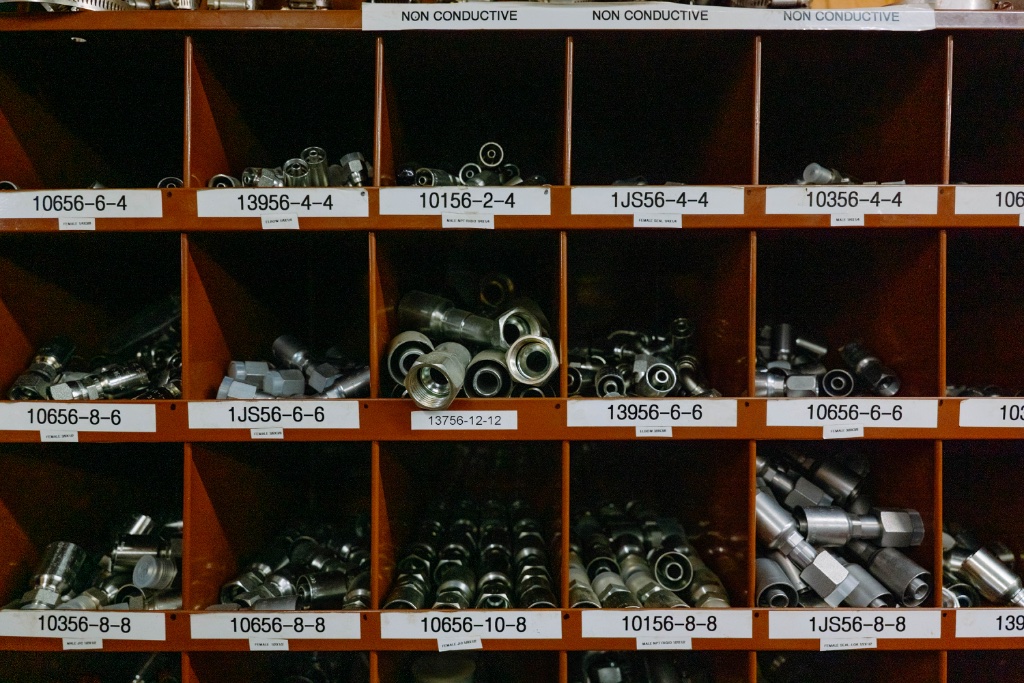
Hydraulic System Inspection
Hydraulic system health is the primary determinant of operational reliability for bucket trucks, aerial lifts, and other hydraulically operated contractor fleet assets. Mobile fleet maintenance Florida programs must include dedicated hydraulic system inspection — not just fluid level checks — covering fluid condition analysis, hose assembly inspection, cylinder seal integrity testing, pump and valve function assessment, and pressure system verification.
Florida's heat and humidity environment creates specific hydraulic failure risks. Thermal cycling in Florida's sustained high temperatures accelerates hydraulic seal degradation. Moisture infiltration through reservoir breather systems — elevated by Florida's humidity — introduces water contamination that reduces fluid lubricity and promotes internal corrosion. Hose cover degradation from UV exposure in Florida's intense solar environment reduces hose assembly service life relative to national averages.
Hydraulic inspections under CRANETEC preventive programs assess fluid water content, hose assembly condition at fittings and routing points, cylinder drift under sustained load, and overall system pressure and flow performance — providing advance warning of developing failures before they produce field breakdowns.
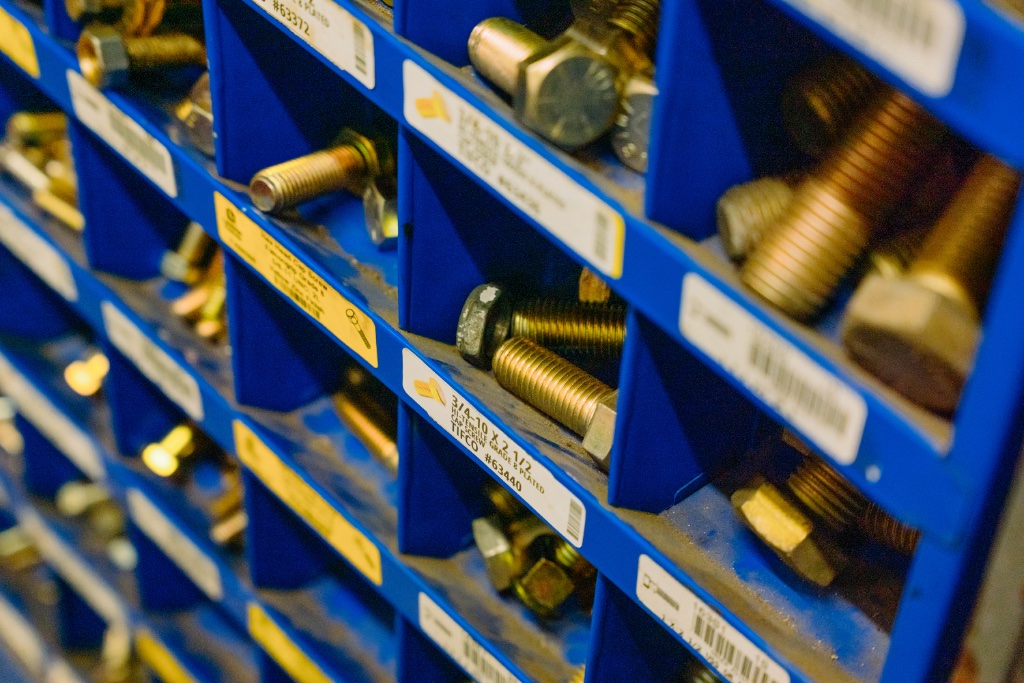
Electrical System Diagnostics
Electrical system diagnostics are an essential but frequently underemphasized component of fleet maintenance programs Florida contractors depend on. For bucket trucks and aerial equipment, electrical control systems manage boom operation, safety interlocks, and compliance systems — and failures in these systems produce both operational disruptions and safety incidents.
Florida's humidity environment creates specific electrical failure mechanisms. Enclosure gasket degradation allows moisture infiltration into junction boxes and control modules, producing corrosion on relay contacts and connector interfaces that increases circuit resistance and causes intermittent or erratic control behavior. Battery case seal degradation in coastal humidity allows internal moisture accumulation that accelerates self-discharge and reduces cold-cranking reserve.
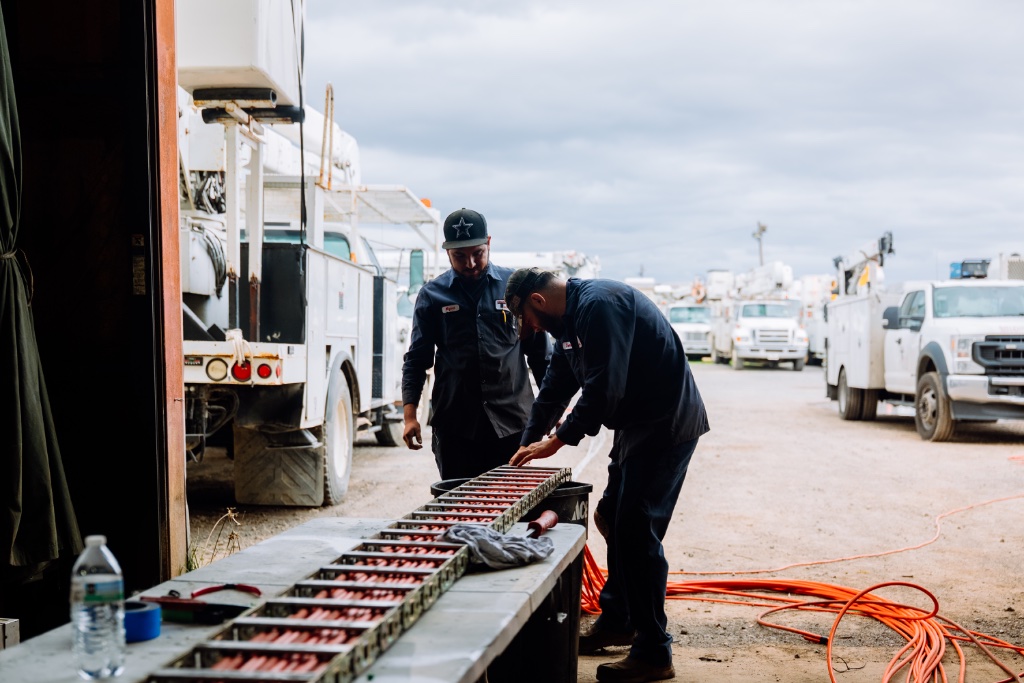
Electrical diagnostics under CRANETEC preventive programs include enclosure seal inspection, connector interface assessment for oxidation deposits, control function verification through the complete range of motion, insulation resistance testing on harnesses, and battery load testing — providing condition information that predicts developing failures rather than confirming them after they occur.
Equipment Safety Inspections
Safety system inspections for contractor fleet equipment operating aerial devices are both a regulatory requirement and an operational necessity. ANSI A92.2 mandates annual inspection of all aerial devices by a qualified person — a requirement that does not accommodate operational urgency and that utility clients enforce at staging. Preventive maintenance contractor fleets Florida programs that integrate ANSI inspection scheduling ensure compliance is maintained without creating last-minute conflicts with project deployment schedules.
Beyond the annual ANSI requirement, safety system inspections cover outrigger interlock function, overload system performance, emergency lowering systems, and all operator and ground control systems. Outrigger systems in Florida deserve specific attention given the state's high water table and frequently saturated soils — conditions that create stability challenges beyond those encountered in drier operating environments.
For energized-line utility work, annual dielectric testing is required by OSHA and mandated by utility clients across Florida. Dielectric certification must be current and the certification decal present and legible on each unit. Florida's utility equipment service environment makes maintaining current dielectric certification a hard operational requirement.
Fluid Monitoring and Lubrication
Fluid condition monitoring extends the value of individual service events into a trend analysis framework that enables proactive maintenance decisions. Consistent oil analysis — evaluating viscosity, water content, contamination levels, and wear metal content across multiple service intervals — identifies patterns that indicate developing engine or hydraulic system wear before operational symptoms appear.
Lubrication service addresses the boom pins, outrigger pivot points, rotation bearings, and other articulation interfaces that require regular grease application to prevent metal-to-metal contact and accelerated wear. In Florida's high-humidity environment, lubricant migration and water washout at bearing interfaces are specific concerns — lubrication intervals should account for these Florida-specific conditions rather than applying standard calendar-based guidelines.
Florida Contractor Fleet Maintenance Service Intervals
| Service | Interval (FL-Adjusted) | Priority | Notes |
|---|---|---|---|
| Engine Oil & Filter | Every 250–500 hrs / 5,000–7,500 mi | Critical | Compressed in FL heat — do not exceed interval |
| Hydraulic Fluid Inspection | Quarterly | High | Check water content and contamination levels |
| Hydraulic Fluid Change | Annual / 1,000 hrs | High | Sooner if analysis shows degradation |
| Air Filter Replacement | Every 250–500 hrs | Medium | More frequent in dusty job site conditions |
| Electrical System Diagnostics | Semi-annually | High | Enclosure seals, connectors, control function |
| Hydraulic Hose Inspection | Quarterly | High | Cover condition, fitting corrosion, routing |
| Lubrication Points | Monthly / per mfr spec | Medium | Boom pins, outrigger pivots, rotation bearings |
| Safety System Inspection | Semi-annually | Critical | Interlocks, overload systems, outrigger function |
| Annual ANSI A92.2 Inspection | Annual — mandatory | Critical | Required for aerial device operation |
| Dielectric Testing | Annual — mandatory | Critical | Required for energized-line work |
Intervals represent Florida-adjusted recommendations. Specific intervals should be calibrated to individual fleet operating conditions.
Contractor Fleets That Benefit from Preventive Maintenance
Preventive fleet maintenance Tampa, preventive fleet maintenance Orlando, and statewide Florida programs apply across the full spectrum of contractor fleet vehicle types. Any vehicle operating under contractor duty cycles in Florida's demanding environment benefits from structured preventive maintenance — and the business case for the program grows stronger with fleet size and asset value.
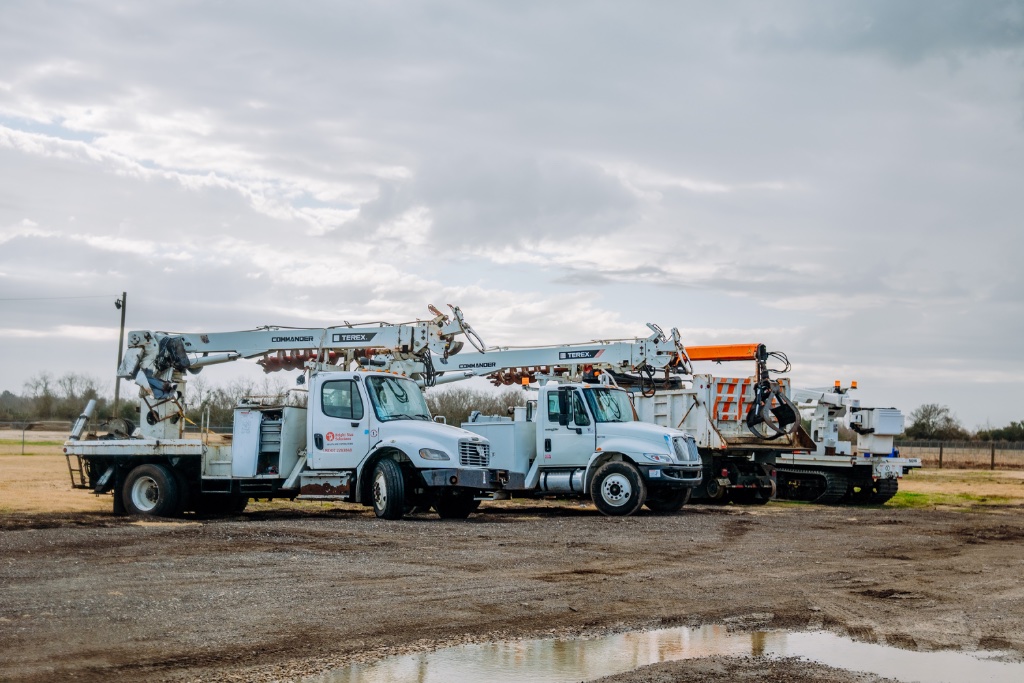
Bucket Trucks
High-value assets with both engine and hydraulic maintenance requirements. Mobile preventive programs eliminate shop transport cost while maintaining both fluid systems at proper intervals. ANSI and dielectric compliance integrated into scheduled service cadence.
Digger Derricks & Line Trucks
Utility construction equipment with high hydraulic system demands and complex electrical control systems. Florida's heat and humidity intensify hydraulic seal and electrical connector degradation rates — making structured preventive programs particularly valuable.
Service Trucks
High-mileage support vehicles operating across distributed Florida project sites. Consistent oil change intervals under mobile preventive programs ensure engine longevity without requiring vehicles to leave project areas for shop service.
Heavy-Duty Pickup Trucks
Fleet-wide preventive programs covering the foreman and project management vehicles that represent a large share of administrative fleet count. Mobile service visits covering all units simultaneously simplify maintenance management.
Municipal Utility Vehicles
Government and municipal fleet operators benefit from mobile preventive programs that deliver consistent maintenance documentation supporting regulatory compliance, asset management, and budget planning requirements.
Contractor Work Trucks
Flatbeds, dump trucks, crane trucks, and specialized commercial vehicles operating in Florida's construction environment. High-hour, high-demand operation in Florida's heat requires preventive service intervals calibrated to actual conditions.
Mobile Preventive Maintenance Across Florida
The mobile service delivery model is what makes fleet maintenance programs Florida contractors operate practically executable. Traditional shop-based maintenance requires vehicles to leave project sites, transit to service facilities, wait in service queues, and return — generating four to eight hours of vehicle unavailability per service event, multiplied across every unit in the fleet. For active construction and utility operations, this logistics burden routinely causes maintenance deferrals that compound into higher failure rates and maintenance costs.
CRANETEC mobile service units are equipped to perform the complete scope of utility fleet maintenance Florida at any accessible contractor location — carrying full fluid inventories, filter stock, hydraulic tooling, diagnostic equipment, and documentation systems. A coordinated mobile service visit covers multiple vehicles in a single event, converting what would be days of individual shop trips into a single scheduled maintenance event at the contractor's facility.
For Tampa, FL mobile fleet maintenance and Orlando, FL mobile fleet maintenance, CRANETEC provides coordinated preventive programs that align service scheduling with Florida's operational calendar — including pre-summer thermal preparation, pre-storm-season compliance verification, and post-deployment inspection following storm response events.
Preventive fleet maintenance Tampa Bay, Hillsborough County, and Gulf Coast corridor.
Contractor fleet service across Orlando metro, I-4 corridor, and Central Florida.
Mobile fleet maintenance I-4 corridor between Tampa and Orlando.
Fleet maintenance programs Gulf Coast and Pinellas County coastal markets.
Preventive maintenance contractor fleets Osceola County and South Orlando.
Fleet service programs Orange County west and Highway 429 corridor.
Building a Fleet Maintenance Schedule
An effective preventive maintenance contractor fleets Florida schedule is built on four components: defined service intervals, systematic maintenance tracking, structured inspection planning, and coordinated fleet service scheduling. Each component contributes to the overall reliability of the program — and gaps in any one create the compliance failures and increased failure rates that make preventive programs appear less effective than they should be.
Fleet Maintenance Program Setup — Florida Contractor Fleets
Complete this sequence to establish a structured preventive program
Service Intervals and Maintenance Tracking
Service intervals for Florida contractor fleets should be established through a combination of manufacturer guidelines, equipment type, duty cycle, and Florida-specific environmental factors. The tracking system used to manage these intervals — whether a spreadsheet, fleet management software, or a service provider's documentation — must be accessible to the fleet manager, updated at every service event, and produce advance notification when services are approaching due dates.
CRANETEC provides complete maintenance documentation for every mobile service event — recording service performed, fluid types and quantities, filter part numbers, findings from condition assessments, and any corrective actions recommended or performed. This documentation creates the per-unit service history that supports ANSI inspection readiness, warranty compliance, contractor qualification, and fleet lifecycle planning.
Inspection Planning and Fleet Service Scheduling
Inspection planning for Florida contractor fleets must integrate both the periodic maintenance inspections built into service intervals and the annual regulatory inspection requirements — ANSI A92.2 for aerial devices and dielectric testing for energized-line units — that have hard compliance deadlines. A preventive program that manages fluid service intervals but allows ANSI or dielectric certifications to lapse fails its compliance function at the moment it matters most: when equipment is being qualified for project deployment.
Fleet service scheduling under mobile preventive programs is coordinated to minimize operational disruption. Multi-vehicle service events are scheduled during lower-activity periods — early mornings, shift changes, or scheduled yard days — to complete maintenance across the fleet without affecting field productivity. For Florida contractors managing active construction or utility operations, CRANETEC works around project schedules to deliver maintenance service without creating the operational conflicts that shop-based maintenance routinely produces.
Florida Contractor Fleet Preventive Maintenance Readiness Checklist

Florida Fleet Maintenance Resources
Explore CRANETEC's complete Florida mobile service capabilities across the state's major contractor markets.