CRANETEC — Utility Construction Equipment Authority
What Are Pullers and Tensioners? A Complete Guide for Fiber Construction Contractors
The definitive guide to pullers and tensioners — what they are, how they work together, where they're used, and why they've become essential equipment for fiber optic, telecommunications, and utility construction projects.
The expansion of fiber optic networks, broadband deployment, and underground utility construction has made specialized cable installation equipment essential for modern infrastructure projects. For anyone who has asked what are pullers and tensioners, the answer is fundamental to understanding how cable installation works at the scale and quality that today's projects demand. Pullers and tensioners are the specialized machines that make long-distance cable installation possible — providing the controlled pulling force and tension management that manual methods cannot achieve.
Fiber optic network expansion is driving unprecedented demand for cable installation equipment. Telecommunications providers, internet service providers, and government broadband programs are deploying fiber at a scale never before seen — thousands of miles of fiber optic cable being installed across the country. Broadband deployment funded by federal infrastructure investment is creating project demand that requires efficient, reliable cable installation equipment. Underground utility construction is creating additional demand — electric utilities, gas utilities, and municipal infrastructure projects all involve underground cable installation.
Telecommunications growth — driven by 5G deployment, rural broadband, fiber-to-the-home (FTTH), and data center construction — continues to drive cable installation demand. These projects require equipment that can install cable at scale, over long distances, with the cable protection that sensitive fiber optic and communications cables demand. Why specialized equipment matters comes down to cable characteristics. Fiber optic cable, telecommunications cable, and power cable are all sensitive to tension, bending radius, and physical damage. Installing these cables correctly requires the controlled handling that pullers and tensioners provide.
How pullers and tensioners improve efficiency is the core of their value. A puller provides the mechanical force to pull cable through conduit or along installation routes — force that would be impossible for manual crews to sustain over long distances. A tensioner maintains controlled tension on the cable during installation, ensuring the cable is not damaged by excessive tension. Together, these machines enable cable installation at a rate, quality, and scale that manual methods cannot match. This guide provides a complete overview of what are pullers and tensioners — from how each machine works through how they work together, the projects that require them, their benefits, maintenance requirements, and rental considerations.
Need Fiber Construction Equipment?
CRANETEC provides pullers, tensioners, cable placers, and contractor fleet support for fiber, telecommunications, and infrastructure projects nationwide.
Puller & Tensioner Rentals
Cable pulling and tensioning equipment for fiber and telecom projects.
Cable Placer Rentals
Cable placement equipment for fiber and telecom projects.
Fiber Construction Fleet Support
Complete fleet support for fiber construction contractors.
Telecommunications Contractor Support
Specialized support for telecom and broadband contractors.
Equipment Overview
What Is a Puller?
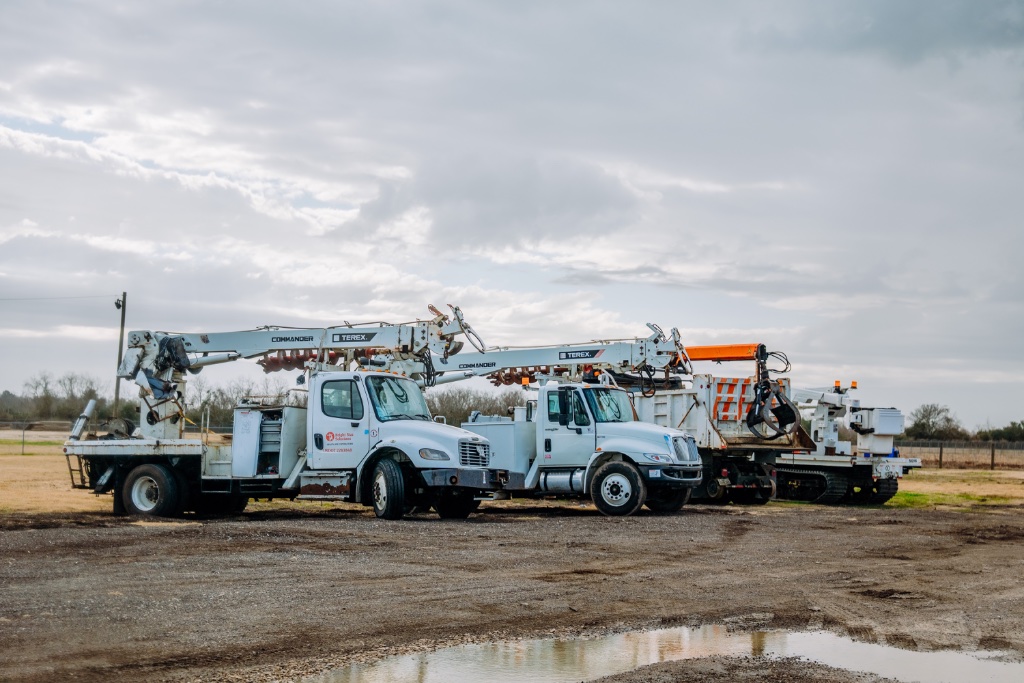
A puller is a specialized piece of construction equipment designed to pull cable through conduit, trenches, or along aerial routes. The puller machine provides the mechanical force needed to move cable over long installation distances — force that manual crews simply cannot sustain. For underground cable installation, where cable must be pulled through conduit runs that can be hundreds or thousands of feet long, a puller is essential equipment.
The purpose of a puller is to provide controlled, consistent pulling force for cable installation. Unlike manual pulling — which is inconsistent, limited by crew strength, and can cause cable damage through jerking — a puller provides smooth, continuous pulling force that protects the cable while moving it efficiently through the installation route. The applications for pullers include underground conduit cable installation, aerial cable installation along pole lines, fiber optic cable pulling, telecommunications cable installation, and power cable installation.
Key components of a puller include the pulling mechanism (typically a capstan or bullwheel system that grips and pulls the cable), the power source (usually hydraulic systems that provide the pulling force), the frame and mounting system, operator controls, and safety systems. The operation of a puller involves feeding cable through the pulling mechanism, engaging the puller, and controlling the pulling speed and force as cable is pulled through the installation route. Common project types that use pullers include fiber optic network construction, broadband expansion, telecommunications infrastructure, underground utility installation, and data center connectivity. Understanding what are pullers and tensioners begins with understanding the puller — the machine that provides the force to move cable.
Equipment Overview
What Is a Tensioner?
A tensioner is a specialized piece of construction equipment designed to maintain controlled tension on cable during installation. The tensioner machine ensures that cable is installed with the correct tension throughout the installation process — preventing the over-tensioning that can damage cable and the under-tensioning that causes installation quality issues. For fiber optic cable installation, where tension limits must be precisely maintained to protect the optical fibers, a tensioner is essential.
The purpose of a tensioner is cable protection. Cable — particularly fiber optic cable — has specific tension limits that must not be exceeded during installation. Exceeding these limits can damage the cable, causing signal loss, reduced performance, or complete failure. A tensioner maintains tension within the specified limits, ensuring the cable is installed correctly and will perform as designed. Proper tension control is the core function of the tensioner, and it directly affects installation quality — cable installed with correct tension has fewer post-installation issues and longer service life.
The differences from pullers are important to understand. A puller provides the force to move cable forward — it pulls cable through the installation route. A tensioner maintains tension on the cable — it ensures the cable is not over-tensioned or under-tensioned during installation. While a puller is about moving cable, a tensioner is about protecting cable. On many projects, both machines are used together: the puller provides pulling force while the tensioner maintains proper cable tension. Understanding this distinction is central to understanding what are pullers and tensioners and how they work as a coordinated system.
Coordinated Operation
How Pullers and Tensioners Work Together
Understanding what are pullers and tensioners includes understanding how these two machines work together during cable installation. On most cable installation projects, the puller and tensioner are used as a coordinated system — the puller provides pulling force while the tensioner maintains proper cable tension.
Cable Installation Workflow
Cable Reel Setup
Cable reel positioned and prepared for payout
Tensioner Engages
Tensioner applies controlled tension to cable
Puller Pulls
Puller provides force to move cable through route
Tension Monitored
Tension maintained within cable specifications
Installation Complete
Cable installed with proper tension and protection
The cable installation workflow begins with cable reel setup — positioning the cable reel for controlled payout. The tensioner then engages the cable, applying controlled tension to prevent slack and manage the cable as it's pulled. The puller provides the pulling force to move cable through the conduit or along the installation route. Throughout the installation, tension is monitored and maintained within the cable manufacturer's specifications. This coordinated operation ensures cable is installed correctly — with proper tension, without damage, and at an efficient pace.
Project planning is essential for effective puller and tensioner operation. The installation route must be assessed, conduit conditions verified, cable specifications confirmed, and equipment positioned correctly before installation begins. Operator coordination — between the puller operator, tensioner operator, and ground crew — ensures the installation proceeds smoothly and safely. Safety is paramount: the forces involved in cable pulling can be dangerous, and proper coordination, communication, and safety protocols are essential. Equipment efficiency comes from proper planning, coordination, and maintenance — when pullers and tensioners are used correctly, cable installation is fast, safe, and reliable.
Project Planning
Planning a Fiber Construction Project?
CRANETEC provides pullers, tensioners, cable placers, contractor fleet support, and specialized equipment rentals for fiber, telecommunications, and utility construction projects.
Project Applications
Projects That Require Pullers and Tensioners
Pullers and tensioners are used across a range of projects that involve cable installation. Understanding these project types helps contractors recognize when this equipment is the right choice for their work — and reinforces why understanding what are pullers and tensioners is relevant across so many project categories.
Fiber Optic Installation
Underground and aerial fiber optic cable installation for network buildouts, last-mile fiber, and FTTH construction.
Broadband Expansion
Large-scale broadband deployment projects funded by federal and state infrastructure programs.
Telecommunications
Communications cable installation for telecom network expansion, upgrades, and new service areas.
Utility Construction
Underground electrical and utility cable installation for distribution systems and modernization.
Municipal Infrastructure
Municipal fiber networks, smart city infrastructure, and public utility communications systems.
Transportation Projects
Highway communications, traffic systems, and intelligent transportation infrastructure installation.
Data Center Infrastructure
Data center connectivity, campus network infrastructure, and high-capacity data communications.
Fiber optic installation is the primary driver of puller and tensioner demand. Underground fiber installation through conduit, aerial fiber along pole lines, and fiber distribution network construction all require the controlled cable handling that these machines provide. Broadband expansion projects funded by federal infrastructure programs are deploying fiber at unprecedented scale — pullers and tensioners are the equipment that makes this deployment possible. Telecommunications, utility construction, municipal infrastructure, transportation projects, and data center infrastructure all depend on pullers and tensioners for efficient, reliable cable installation.
Benefits
Benefits of Using Pullers and Tensioners
The benefits of pullers and tensioners extend across cable protection, productivity, labor costs, installation quality, downtime, and safety. These benefits are why understanding what are pullers and tensioners matters for any contractor involved in cable installation.
Reduced Cable Damage
Controlled pulling force and tension management prevent the over-tensioning and jerking that damages cable during manual installation.
Improved Productivity
Mechanized cable installation is significantly faster than manual methods, enabling longer installation runs per day.
Lower Labor Costs
Pullers and tensioners reduce the crew size needed for cable installation, lowering labor costs per foot of installed cable.
Better Installation Quality
Proper tension control ensures cable is installed correctly, reducing post-installation issues and service calls.
Reduced Downtime
Reliable equipment keeps installation on schedule. Properly maintained pullers and tensioners minimize equipment-caused delays.
Higher Safety
Mechanized cable handling reduces the manual labor and physical strain that cause workplace injuries during cable installation.
Rental Strategy
When Should You Rent Instead of Buy?
For many contractors, puller and tensioner rental is the right strategy rather than ownership. Understanding when to rent is part of understanding what are pullers and tensioners in practical project terms.
Temporary projects are the primary rental scenario. Fiber construction projects, broadband expansion contracts, and telecommunications infrastructure projects have defined timelines — equipment is needed for the project duration, not necessarily year-round. Fleet flexibility is another advantage — rental equipment allows contractors to take on projects with varying equipment requirements without committing to permanent fleet expansion. Capital preservation is a financial benefit — rental eliminates the capital expenditure of equipment purchase, freeing capital for other business needs.
Emergency equipment needs — when owned equipment is down for repair or when unexpected project demand arises — can be filled quickly with rental equipment. Seasonal demand creates rental opportunities for contractors whose cable installation work varies by season. For any project-based, temporary, or seasonal cable installation need, puller and tensioner rental provides the equipment without the capital commitment, maintenance responsibility, or idle equipment costs of ownership.
Supporting Modern Fiber Construction
Supporting Modern Fiber Construction
CRANETEC supports fiber construction and telecommunications contractors through a complete equipment and service ecosystem. Equipment rentals provide pullers, tensioners, cable placers, and related equipment for project-based deployment. Fleet maintenance programs keep contractor-owned equipment operational and available. Project readiness coordination ensures equipment is delivered, positioned, and ready when the project needs it. Hydraulic repair services address equipment issues that would otherwise cause project downtime. Inspection support ensures equipment meets project qualification requirements. This integrated support approach is what makes CRANETEC the equipment partner that fiber construction contractors rely on.
Equipment Care
Maintenance Tips for Pullers and Tensioners
Like all construction equipment, pullers and tensioners require regular maintenance to remain operational and reliable. Understanding maintenance requirements is part of understanding what are pullers and tensioners and the ongoing responsibilities that come with equipment ownership or rental.
Daily inspections before operation catch developing issues. Check hydraulic hoses for leaks or damage, verify fluid levels, inspect cable handling components for wear, test controls, and check safety devices. Hydraulic maintenance is critical — pullers and tensioners rely on hydraulic systems for pulling force and tension control. Regular hydraulic fluid and filter service prevents the contamination and degradation that causes pump and valve failure.
Lubrication of moving components, inspection of cable handling components (capstans, bullwheels, rollers) for wear, proper storage to protect equipment between projects, and consistent preventive maintenance at scheduled intervals are all essential. CRANETEC provides comprehensive fleet preventive maintenance programs and mobile oil change and fluid services that keep pullers, tensioners, and related equipment in operational condition.
Rental Solutions
Need Specialized Equipment Without Long-Term Ownership Costs?
CRANETEC provides puller and tensioner rentals and utility equipment for fiber, telecommunications, and infrastructure contractors — maintained, inspected, and ready for deployment.
Industry Applications
Industries That Depend on Pullers and Tensioners
Pullers and tensioners are essential equipment across multiple industries. Understanding the industries that depend on this equipment provides context for what are pullers and tensioners and why the equipment is so widely used.
Fiber Construction
Fiber construction contractors use pullers and tensioners for underground and aerial fiber installation. Fiber optic cable requires the controlled handling that this equipment provides.
Telecommunications
Telecommunications contractors use pullers and tensioners for network expansion, cable replacement, and new service area installation.
Electric Utilities
Electric utilities use pullers and tensioners for underground distribution cable installation and utility modernization projects.
Municipal Utilities
Municipal utility departments use pullers and tensioners for municipal fiber networks and public utility infrastructure.
Infrastructure Contractors
Infrastructure contractors use pullers and tensioners for large-scale cable installation across multiple project types.
Government Contractors
Government contractors use pullers and tensioners for infrastructure projects with federal, state, and municipal requirements.
The CRANETEC Difference
Why Contractors Choose CRANETEC
Contractors choose CRANETEC for puller and tensioner rentals and fleet support because of the company's deep equipment expertise, comprehensive rental fleet, and integrated approach to contractor support. CRANETEC provides more than equipment — it provides the complete support infrastructure that cable installation projects require.
Equipment Expertise
30+ years of specialized experience with utility construction equipment.
Rental Fleet
Pullers, tensioners, cable placers, and related equipment for project-based deployment.
Maintenance
Preventive maintenance programs for contractor-owned equipment fleets.
Hydraulic Repair
On-site hydraulic repair for pullers, tensioners, and related equipment.
Multi-State Support
Consistent service standards across multiple service regions.
Contractor-Focused Service
Equipment coordination, delivery, and project support for contractors.
Equipment Pairings
Related Equipment
Pullers and tensioners are part of a broader ecosystem of cable installation equipment. Understanding what are pullers and tensioners includes understanding the equipment that works alongside them.
Cable Placers
Cable placement equipment for fiber and telecom projects.
Pullers
Cable pulling equipment for underground conduit installations.
Tensioners
Cable tensioning equipment for proper installation.
Digger Derricks
Pole setting and material handling equipment.
Bucket Trucks
Aerial lift equipment for pole-mounted work.
Technical Resources
Explore More Fiber Construction Resources
Access equipment guides, fleet planning resources, and contractor support documentation for fiber and utility construction operations.
Get Started
Request Puller & Tensioner Rental Information
Submit your project details and our team will respond with equipment availability, rental pricing, and delivery options for your cable installation project.
FAQ
Frequently Asked Questions
CRANETEC Services
Related Services
Complete fiber construction and utility equipment support — from puller and tensioner rentals to fleet maintenance and contractor services.
Get Started
Need Pullers or Tensioners for Your Next Project?
CRANETEC supports contractors with specialized equipment rentals, fleet maintenance, inspections, and contractor support services for fiber, telecommunications, and infrastructure projects. One call connects you to the equipment and services your project requires.