CRANETEC — Utility Equipment Rental Authority
When Should You Rent a Digger Derrick Instead of Buying One?
A comprehensive contractor guide to digger derrick rental vs ownership — comparing costs, project requirements, maintenance responsibilities, and fleet planning strategies for utility, telecommunications, and infrastructure contractors.
For utility contractors, telecommunications contractors, and fleet managers responsible for equipment deployment decisions, the question of when to rent a digger derrick vs buy is becoming increasingly consequential. Rising equipment costs, changing project demand patterns, and the operational realities of modern contractor fleet management are shifting the economics of equipment ownership. A new digger derrick can cost $150,000 to $400,000 or more — a capital investment that only makes sense when utilization is high enough to justify the purchase price and ongoing ownership costs. For many contractors, the answer is strategic rental rather than ownership.
Rising equipment costs are a primary driver of the rental trend. Digger derricks are specialized, complex machines with hydraulic auger systems, material handling booms, and often insulated configurations for work near energized infrastructure. The cost of acquiring, maintaining, inspecting, and storing this equipment continues to increase. Meanwhile, fleet utilization challenges mean that owned equipment often sits idle between projects — and idle equipment still costs money in insurance, storage, and depreciation. Renting converts these fixed costs into variable costs tied to project activity.
Project-based demand defines the operational reality for many contractors. Fiber construction projects, utility pole replacement programs, telecommunications infrastructure expansion, and infrastructure construction contracts all have defined timelines. Equipment needed for these projects is needed for the project duration — not necessarily year-round. Utility contractor needs include equipment for distribution line work, pole installation, and storm restoration. Telecommunications construction growth is driving demand for aerial and digging equipment for fiber and broadband deployment. Infrastructure expansion across multiple sectors is creating project-based equipment demand that is well-suited to rental rather than ownership.
This guide explains when to rent a digger derrick vs buy — from the true cost of ownership through the scenarios where rental makes sense, the scenarios where buying makes sense, and the fleet planning strategies that help contractors make the right equipment decision for each project. Whether you are managing a fleet of owned equipment and considering supplemental rentals, or evaluating whether your next equipment acquisition should be a rental rather than a purchase, this guide provides the framework for making that decision.
Need Utility Equipment Rental Support?
CRANETEC provides digger derrick rentals, utility equipment, and fleet support for contractors nationwide. Explore our rental and support services:
Digger Derrick Rentals
Digger derrick equipment for utility, telecom, and infrastructure projects.
Utility Equipment Rentals
Complete utility equipment rental catalog and coordination.
Fiber Construction Fleet Support
Fleet support for fiber construction and broadband deployment.
Resource Center
Equipment guides and fleet planning resources.
Equipment Applications
What Is a Digger Derrick Used For?
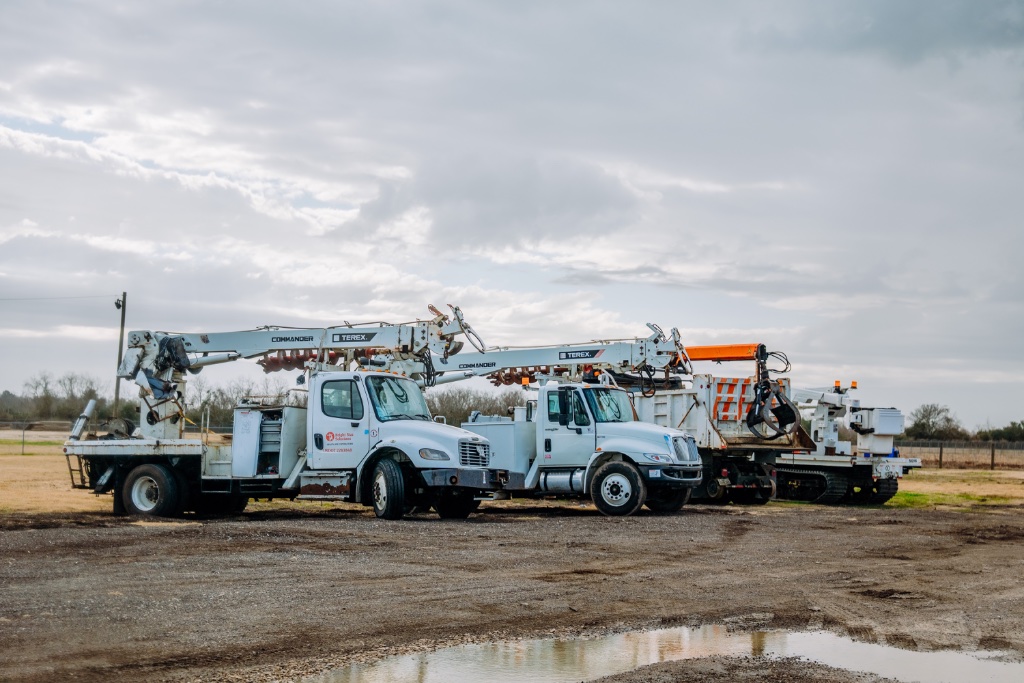
A digger derrick is a specialized truck-mounted machine that combines a digging auger with a material handling boom. The auger drills holes for utility poles, and the boom lifts, positions, and sets the poles in the holes. This combination makes digger derricks the primary equipment for utility pole installation and replacement across electric utility, telecommunications, and infrastructure construction operations. Understanding what the equipment does is the first step in understanding when to rent a digger derrick vs buy.
Pole installation is the core application. Electric utility contractors use digger derricks to set distribution and transmission poles during line construction, pole replacement programs, and storm restoration. The auger drills the pole hole, the boom lifts the pole from the transport position, and the operator maneuvers the pole into position for setting. This process requires a machine that can dig, lift, and position heavy poles — a capability that defines the digger derrick as a piece of equipment.
Utility construction extends beyond pole setting. Digger derricks are used for transformer setting, material handling at elevation, equipment positioning, and infrastructure installation where heavy material must be lifted and placed precisely. Telecommunications projects use digger derricks for pole setting during fiber optic cable installation, broadband expansion, and telecommunications infrastructure construction. The growth of fiber construction has made digger derricks essential equipment for telecommunications contractors who previously may not have needed this capability.
Fiber deployment and infrastructure projects represent the growing demand for digger derrick equipment. Federal infrastructure investment, broadband expansion programs, and utility modernization projects are all driving demand for equipment that can install poles and handle material at elevation. Material handling capabilities make digger derricks useful beyond pole setting — any contractor that needs to lift and position heavy material at a job site can benefit from digger derrick equipment. This range of applications is why the when to rent a digger derrick vs buy decision is relevant across so many contractor types.
Cost Analysis
The True Cost of Owning a Digger Derrick
Understanding when to rent a digger derrick vs buy requires understanding the true cost of ownership. The purchase price is only the beginning — ownership carries ongoing costs that accumulate whether the equipment is deployed or sitting idle. Below is a breakdown of the cost categories that ownership entails.
| Cost Category | Typical Cost | Notes |
|---|---|---|
Purchase Price | $150,000 – $400,000+ | Capital expenditure based on specs and manufacturer |
Financing | Varies | Interest payments over financing term |
Insurance | Annual | Equipment insurance premiums |
Maintenance | Ongoing | Hydraulic, structural, mechanical service |
ANSI Inspections | Annual | A92.2 compliance inspection requirement |
Dielectric Testing | Annual | Required for insulated units |
Storage | Monthly | Yard or facility storage when not deployed |
Transportation | Per Project | Equipment transport to and from sites |
Purchase price is the most visible cost — a new digger derrick represents a significant capital investment. Financing adds interest payments over the financing term. Insurance is an annual premium that must be paid whether the equipment is deployed or idle. Maintenance is ongoing — hydraulic systems, structural components, and mechanical systems all require service over the equipment's life.
ANSI inspections are required annually under A92.2 standards, and dielectric testing is required annually for insulated units. These compliance costs are not optional — they are the cost of keeping the equipment legally operable. For detailed information on these requirements, see our resources on ANSI bucket truck inspections and dielectric testing.
Storage is the cost that many contractors underestimate — when the equipment is not deployed, it must be stored somewhere, and yard or facility storage carries a monthly cost. Transportation is the cost of moving the equipment to and from project sites, which for multi-state operations can be substantial. When all these costs are added together, the true cost of digger derrick ownership extends far beyond the purchase price — and this total cost of ownership is what makes the digger derrick costs analysis favor rental for project-based equipment needs.
Rental Scheduling
Need Equipment for an Upcoming Project?
Renting can reduce capital expenses while giving your team access to the equipment they need. CRANETEC provides digger derrick rentals with delivery, maintenance, and inspection documentation included.
Rental Scenarios
When Renting a Digger Derrick Makes Sense
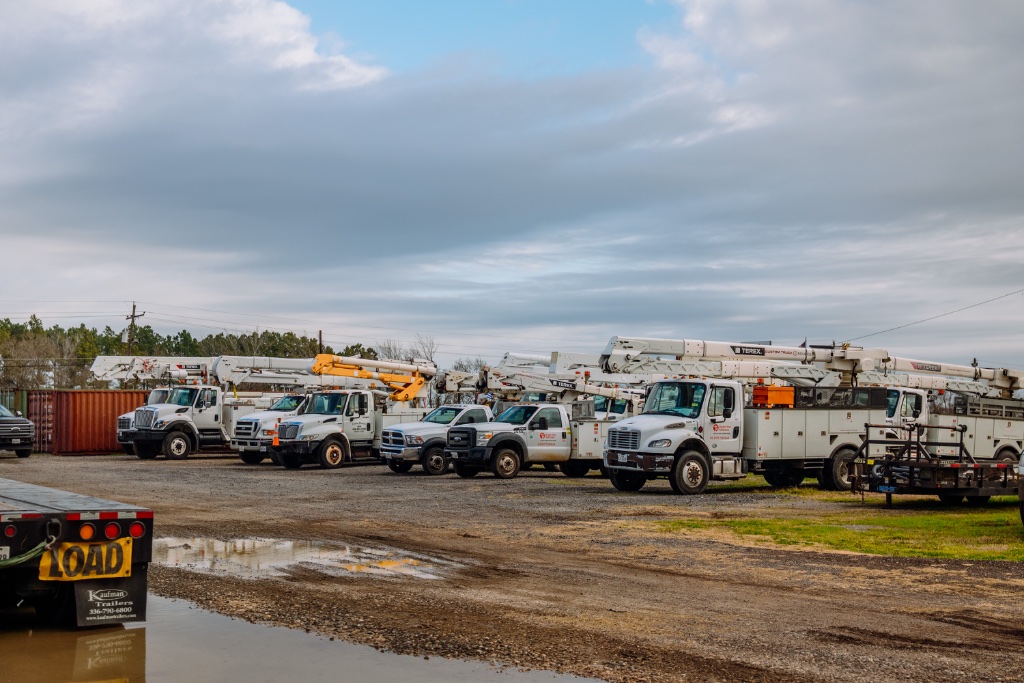
Understanding when to rent a digger derrick vs buy requires recognizing the scenarios where rental is the clear choice. These are situations where the equipment need is temporary, variable, or does not justify the capital commitment of ownership.
Short-term projects are the most common rental scenario. A fiber construction project that runs for three months, a utility pole replacement program that runs for six weeks, or a specific infrastructure contract that requires digger derrick capability for a defined period — all are situations where renting provides the equipment needed without the capital investment of ownership. When the project ends, the equipment is returned, and there is no idle equipment to maintain, store, or insure.
Seasonal workloads create rental demand for contractors whose equipment needs vary by season. Utility contractors with higher workloads during construction season, telecommunications contractors with peak installation periods, and infrastructure contractors with project-based demand all benefit from rental equipment that scales with seasonal demand rather than carrying year-round ownership costs for equipment that is only needed seasonally.
Emergency replacement equipment is another key rental scenario. When a contractor-owned digger derrick goes down for repair, a rental can fill the gap and keep the project moving. Rather than experiencing project downtime while owned equipment is repaired, contractors can rent replacement equipment and maintain project continuity. New market expansion is a scenario where contractors entering a new geographic market can rent equipment locally rather than transporting owned equipment long distances or purchasing before market demand is established.
Temporary crew growth and specialized project requirements complete the rental scenarios. When a contractor adds crews to meet project demand, rental equipment can equip the new crews without capital expenditure. When a project requires equipment specifications that the contractor's owned fleet does not include, renting provides access to the specific equipment needed for that project. In all these scenarios, the when to rent a digger derrick vs buy calculation favors rental — the equipment need is real but does not justify ownership.
Ownership Scenarios
When Buying a Digger Derrick Makes Sense
While rental is the right choice for many scenarios, there are situations where ownership is the clear decision. A balanced analysis of when to rent a digger derrick vs buy must acknowledge the scenarios where buying makes sense.
Long-term utilization is the primary driver for ownership. When a contractor's equipment utilization is high enough that the equipment is deployed continuously year-round, the per-project cost of owned equipment can be lower than rental. If a digger derrick is used every week throughout the year, the ownership costs are spread across enough project activity to make the capital investment worthwhile. Digger derrick ownership makes economic sense when utilization justifies the capital, maintenance, and compliance costs.
Dedicated crews and frequent project use are indicators that ownership may be appropriate. Contractors with dedicated crews that operate digger derricks daily as part of their core operations are the candidates for ownership. These contractors need equipment available on demand, configured to their specifications, and operated by their own qualified operators. Asset ownership strategies also play a role — some contractors prefer to own equipment as a business asset, building equity and maintaining full control over the equipment's condition, configuration, and availability.
The decision of when to rent a digger derrick vs buy is not binary across an entire fleet — many contractors maintain a mix of owned and rented equipment. Core equipment that is used continuously may be owned, while supplemental equipment for project-based demand, seasonal workload spikes, or specialized requirements may be rented. This mixed approach optimizes the balance between capital efficiency and equipment availability.
Fleet Strategy
How Rentals Improve Fleet Flexibility
Beyond cost considerations, rental equipment provides fleet flexibility that ownership cannot match. For contractors managing multiple projects, variable demand, and growing operations, equipment fleet planning that includes rental as a strategic option delivers operational advantages.
Project scheduling benefits from rental flexibility. When a contractor secures a new project, rental equipment can be deployed to that project without affecting the owned fleet's deployment to existing projects. This means new project acquisition is not constrained by owned equipment availability — rental equipment fills the gap between owned fleet capacity and total project demand. Fleet scaling becomes possible — contractors can scale their effective fleet size up or down based on project demand rather than being fixed at the owned fleet size.
Reduced downtime is a direct benefit of rental flexibility. When owned equipment requires maintenance, repair, or inspection, a rental can maintain project continuity during the service period. Rather than experiencing project downtime during equipment service windows, contractors can rent replacement equipment and keep crews productive. Equipment availability from rental sources means contractors are not limited to their owned fleet — the rental market provides access to additional equipment when project demand exceeds owned capacity. For infrastructure contractor fleet support, this flexibility is what enables contractors to take on projects that would otherwise exceed their owned equipment capacity.
Contractor responsiveness is the competitive advantage that rental flexibility provides. Contractors who can deploy equipment to new projects quickly — without waiting for equipment purchase lead time or owned equipment availability — can respond to project opportunities that less flexible competitors cannot. This responsiveness translates into contract awards, client satisfaction, and business growth. For broader fleet support strategies, explore our fiber construction fleet support services that help contractors manage equipment needs across multiple project types.
Featured Equipment Support Project
Featured Equipment Support Project
TM125 Lower Re-Hose Project — Beaumont, TX
CRANETEC performed a complete hydraulic lower re-hose restoration on a TM125 bucket truck — demonstrating the equipment uptime, fleet readiness, preventive maintenance, and contractor support capabilities that define CRANETEC's approach to utility equipment service. This project illustrates how proactive maintenance keeps equipment operational and available — the same principle that makes rental equipment valuable. Equipment that is maintained, inspected, and ready for deployment is what contractors need, whether that equipment is owned or rented. The TM125 project demonstrates CRANETEC's commitment to equipment reliability — the foundation of both rental fleet quality and contractor fleet maintenance support.
Utility Contractor Applications
Digger Derrick Rentals for Utility Contractors
Electric utility projects are a primary application for digger derrick rentals. Distribution line construction, transmission pole installation, substation work, and utility infrastructure maintenance all require digger derrick capability. Utility contractors who need equipment for specific projects, seasonal workload increases, or as replacement for owned equipment in service can benefit from rental access to digger derricks that are maintained, inspected, and ready for deployment.
Pole replacement programs are a specific utility contractor application that often favors rental. Utilities and utility contractors frequently undertake pole replacement programs that run for defined periods — replacing aging poles across a distribution system, upgrading poles to support new equipment, or replacing poles damaged by weather or deterioration. These programs have defined timelines and equipment needs that are well-suited to rental rather than permanent fleet expansion.
Distribution work and storm restoration are additional utility contractor applications. Distribution line maintenance and construction require digger derrick capability for pole setting and material handling. Storm restoration creates surge demand for equipment — when storms damage utility infrastructure, contractors need rapid access to equipment for restoration work. Rental equipment provides the surge capacity that storm response requires without the year-round ownership cost of equipment maintained for emergency response. For comprehensive electric utility contractor support, CRANETEC provides both rental equipment and the fleet services that utility operations require.
Telecom Contractor Applications
Digger Derrick Rentals for Telecommunications Contractors
Fiber construction is driving significant demand for digger derrick rentals among telecommunications contractors. Fiber optic network installation requires pole setting, material handling, and aerial work capabilities that digger derricks provide. As fiber construction projects expand across rural and suburban markets, telecommunications contractors need equipment for project-based deployment — exactly the scenario where when to rent a digger derrick vs buy favors rental.
Broadband expansion programs funded by federal infrastructure investment are creating project-based equipment demand across the telecommunications industry. Contractors bidding on broadband expansion projects need equipment for defined project periods — rental provides the equipment without the capital commitment of ownership. The project-based nature of broadband expansion work aligns with the rental model: equipment is needed for the project duration, and when the project is complete, the equipment is returned.
Telecommunications infrastructure and utility pole work require digger derrick capability for pole installation, pole replacement, and equipment mounting at elevation. Telecommunications contractors who may not have historically needed digger derrick equipment are finding that fiber and broadband construction work requires this capability. Rather than purchasing equipment before project demand is established, these contractors can rent and scale equipment deployment with project acquisition. For comprehensive telecommunications contractor support and fiber construction fleet support, CRANETEC provides the equipment and services that telecommunications contractors need.
Rental Solutions
Need a Digger Derrick Without the Ownership Costs?
CRANETEC provides rental solutions for utility, telecommunications, and infrastructure contractors. Equipment is maintained, inspected, and ready for deployment — with delivery, compliance documentation, and fleet support included.
Rental Planning
Questions to Ask Before Renting a Digger Derrick
Before renting a digger derrick, contractors should work through a planning checklist to ensure the rental meets project requirements. These questions help define the equipment specifications, rental terms, and support services needed for successful project execution.
Project Duration
How long will the equipment be needed — days, weeks, or months?
Lift Requirements
What is the required lift capacity, reach, and digging depth for the project?
Pole Setting Requirements
What pole sizes, types, and depths does the project involve?
Crew Capabilities
Does the crew have qualified operators for digger derrick equipment?
Transportation Needs
How will the equipment be transported to and from the project site?
Maintenance Responsibilities
Who handles maintenance if the equipment needs service during the rental?
Inspection Requirements
Are current ANSI inspection and dielectric testing documents required for project compliance?
Working through this checklist before contacting a rental provider ensures that the rental request includes all the information needed for an accurate quote and appropriate equipment selection. Project duration determines the rental term. Lift requirements and pole setting requirements determine the equipment specifications. Crew capabilities determine whether qualified operators are available. Transportation needs and maintenance responsibilities determine the support services required. Inspection requirements determine the compliance documentation needed for the project.
The CRANETEC Difference
Why Contractors Choose CRANETEC Rentals
Contractors choose CRANETEC for digger derrick rentals because the company provides more than equipment — it provides the complete equipment support infrastructure that contractor operations require. Understanding when to rent a digger derrick vs buy includes understanding which rental provider to choose, and CRANETEC's capabilities set it apart from equipment-only rental sources.
Equipment Support
Maintenance, repair, and service response for rental equipment throughout the rental period.
Fleet Maintenance
Preventive maintenance programs for owned fleets alongside rental equipment support.
Logistics Capabilities
Equipment delivery, mobilization, and multi-state project coordination.
Utility Equipment Expertise
30+ years of specialized experience with utility and telecommunications equipment.
Multi-State Support
Consistent service standards across multiple service regions and project locations.
Contractor-Focused Service
Service delivery structured around the operational realities of active contractor fleets.
Technical Resources
Explore More Equipment Rental Resources
Access equipment guides, fleet planning resources, and contractor support documentation for utility equipment operations.
Get Started
Request a Digger Derrick Rental Quote
Submit your project details and our team will respond with equipment availability, rental pricing, delivery options, and a rental proposal tailored to your project timeline.
FAQ
Frequently Asked Questions
CRANETEC Services
Related Services
Complete utility equipment rental and support — from digger derrick rentals to fleet maintenance and contractor services.
Get Started
Need a Digger Derrick Rental?
CRANETEC provides rental solutions, fleet support, inspections, and contractor services for utility, telecommunications, and infrastructure projects. One call connects you to the equipment and services your project requires.