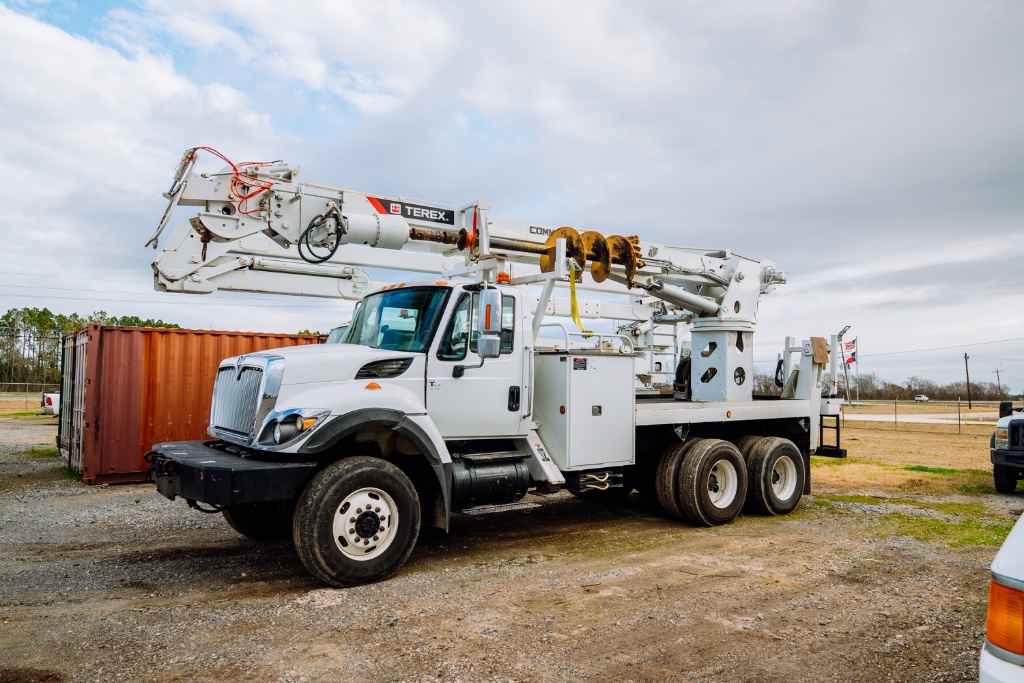
DFW utility fleets face accelerated wear cycles that increase ANSI inspection failure rates relative to more temperate operating environments.
What ANSI Inspections Require for Bucket Trucks
The ANSI A92 series of standards — administered by the American National Standards Institute and developed through industry consensus — establishes the minimum requirements for the design, manufacture, and use of vehicle-mounted elevating and rotating aerial devices. For utility fleet compliance DFW, ANSI A92.2 is the governing document for most bucket truck configurations used in powerline, telecommunications, and distribution infrastructure work.
An ANSI inspection bucket truck requirement under A92.2 mandates a comprehensive evaluation by a qualified person at intervals not to exceed 12 months, or more frequently as specified by the manufacturer or as conditions warrant. The term "qualified person" under the standard requires demonstrated knowledge and ability to evaluate the specific equipment type — a designation that excludes general mechanics without aerial device training.
The scope of a compliant ANSI inspection bucket truck evaluation encompasses six primary technical domains:
Structural Component Evaluation
- —Boom sections for cracks, deformation, and weld integrity
- —Platform and bucket attachment hardware
- —Turntable and rotation assembly condition
- —Outrigger frame and pad condition
- —Mounting structure and body attachment
Hydraulic System Inspection
- —Pump output pressure and flow verification
- —Cylinder function and drift test under load
- —Hose and fitting condition throughout full system
- —Control valve response and calibration
- —Reservoir condition, fluid level, and contamination check
Electrical Control System
- —Upper and lower control function testing
- —Safety interlock and emergency stop verification
- —Limit switch calibration and range restriction
- —Wiring harness and connector condition
- —Control module and relay function
Safety Device Testing
- —Load moment indicator function
- —Outrigger interlock verification
- —Motion alarm and warning system tests
- —Platform gate and fall protection hardware
- —Emergency descent and power-off function
Capacity Plate Verification
- —Legible and secured capacity plate present
- —Load ratings match equipment configuration
- —Operating range diagram matches actual boom configuration
- —Manufacturer data matches equipment as built
Documentation Requirements
- —Previous inspection records present and complete
- —Service history for all major systems
- —Operator training records on file
- —Prior dielectric test certifications current
- —Manufacturer service bulletins addressed
For aerial devices operated near energized electrical infrastructure — the primary use case for most utility fleet compliance DFW operations — the standard imposes additional requirements through its interaction with OSHA electrical safety regulations and the dielectric testing requirements of ANSI A92.2 Section 8. An aerial lift ANSI standards compliant aerial device used for energized line work must demonstrate both mechanical and structural integrity through the A92.2 inspection process and electrical insulation integrity through separate dielectric testing.
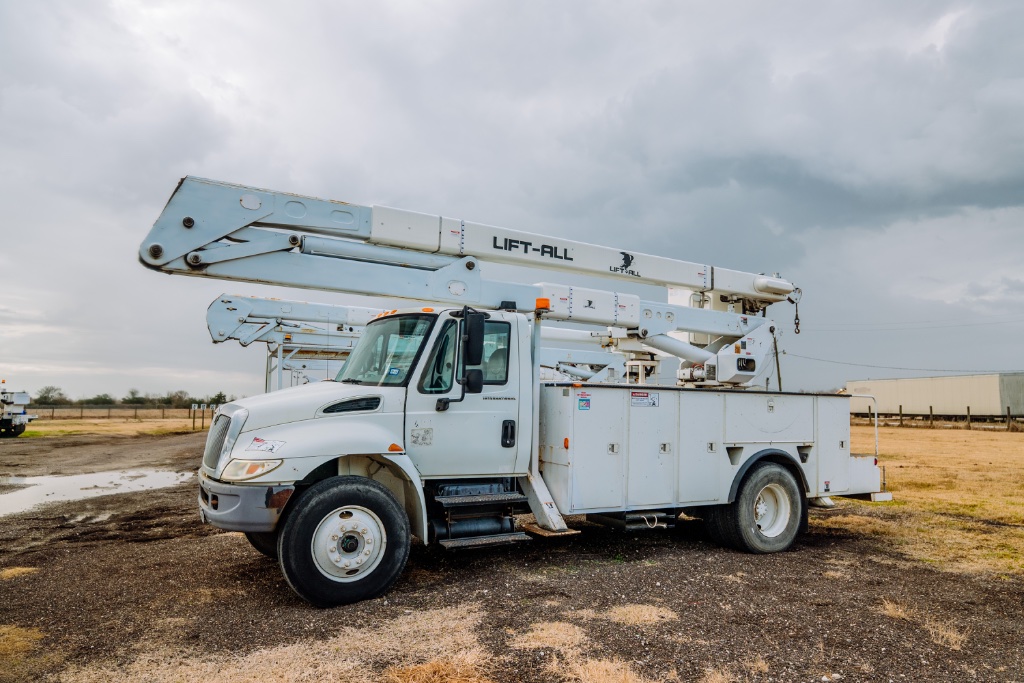
ANSI A92.2 inspections require documented evaluation across structural, hydraulic, electrical, and safety system domains.
What Dielectric Testing Evaluates
Dielectric testing bucket truck procedures measure the electrical insulation performance of the insulated boom sections and bucket liner under conditions that approximate the electrical stress the equipment will experience during energized line work. The test is not a visual inspection — it applies voltage to the insulation system and measures the leakage current that passes through the material, which is the direct measure of insulation integrity that determines whether the crew member in the bucket is adequately protected from the energized conductors below.
The technical parameters of a compliant dielectric test for bucket truck inspection Dallas TX operations include:
Dielectric Test Technical Parameters
What Is Measured
- Insulation Resistance: The resistance the boom material presents to current flow through it, measured in megaohms. Degraded insulation shows reduced resistance values, indicating reduced protection capability.
- Leakage Current: The actual current that flows through the boom insulation under test voltage. ANSI A92.2 specifies maximum allowable leakage current values by equipment class and voltage rating.
- Dielectric Strength: The voltage level at which the insulation material fails — establishes the safety margin between operating voltage and breakdown threshold.
Failure Causes in DFW
- UV Degradation: North Texas UV intensity causes surface oxidation and micro-cracking in fiberglass and resin, reducing insulation resistance over time in ways invisible to visual inspection.
- Thermal Cycling: Repeated heating and cooling of boom sections opens micro-cracks that allow moisture infiltration during spring storm events, reducing insulation resistance.
- Contamination: Hydraulic fluid, road film, and conductive materials on insulated surfaces create leakage paths that can cause failures even in structurally intact insulation.
The compliance safety implications of dielectric test failure are direct: a bucket truck that fails dielectric testing bucket truck standards cannot be legally operated near energized conductors until the insulation deficiency is identified, repaired, and the unit is retested and certified. For OSHA bucket truck inspection compliance purposes under 1926.950, the dielectric test record must be current and available at the job site for any energized line work.
Dielectric test failure causes in bucket truck inspection Dallas TX operations fall into three categories: physical damage to insulated sections from impact or abrasion; material degradation from UV exposure and thermal cycling over multiple DFW summer seasons; and contamination of insulated surfaces with conductive substances. The most dangerous category is material degradation — because the degradation is not visible during routine inspection, the insulation failure is often discovered only when periodic dielectric testing reveals leakage current above the ANSI limit.
Top Reasons Bucket Trucks Fail ANSI Inspections in DFW
CRANETEC's service experience across Dallas, Fort Worth, Arlington, and Irving identifies consistent patterns in ANSI inspection bucket truck failures across North Texas utility fleets. The following failure categories account for the majority of deficiencies found during annual inspections of DFW-operated aerial devices.
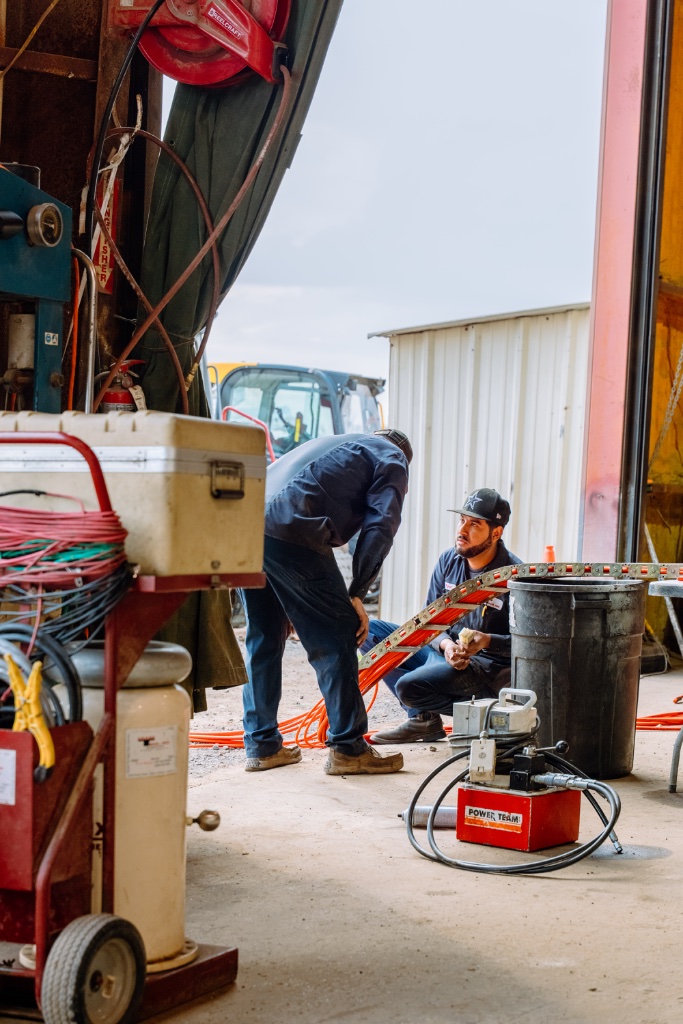
UV degradation and thermal cycling cause micro-cracking in boom insulation that is invisible to visual inspection but detectable through dielectric testing.
Hydraulic Leaks and Pressure Instability
Hydraulic system deficiencies are the most frequently cited failure category in ANSI inspection bucket truck evaluations for DFW fleets. The ANSI A92.2 standard requires that hydraulic systems demonstrate rated pressure capability throughout the full range of boom motion, with no active leakage at any fitting, hose, or component. In practice, this means that any visible hydraulic leak — regardless of apparent size — constitutes an inspection failure that must be corrected before certification can be issued.
For North Texas utility fleets, the mechanism is well-established: sustained heat cycling accelerates hose cover degradation and end fitting corrosion at crimp interfaces, leading to active leakage at pressure peaks during boom operation. Cylinder seal degradation produces leakage at rod seals that may be modest during inspection at ambient temperature but becomes significant under the thermal loads of DFW summer operation. Control valve seal wear creates internal bypass that reduces effective cylinder pressure, causing drift under load that fails the ANSI standard's hold-position test requirements.
Pre-inspection hydraulic service — fluid analysis and replacement, hose condition assessment, cylinder drift testing, and pressure verification — is the most effective method to ensure hydraulic system compliance before a formal ANSI inspection bucket truck evaluation. CRANETEC provides pre-inspection hydraulic diagnostics for DFW fleets as part of scheduled compliance preparation service visits.
Worn Boom Bushings and Structural Fatigue
Articulation point bushings and pivot pins in bucket truck boom assemblies experience continuous wear throughout the equipment's service life. ANSI A92.2 specifies maximum allowable play at boom articulation points — tolerances designed to ensure that the boom structure behaves predictably under load and that load transfer through the boom follows the design assumptions underlying the rated capacity. When bushing wear exceeds these tolerances, the boom exhibits excessive play that fails the structural evaluation and may also compromise safe load handling.
In high-cycle DFW operations — distribution maintenance trucks in Dallas performing multiple full extension cycles per shift — bushing wear occurs faster than in lower-cycle applications. The combination of high cycle count and thermal expansion differentials between steel pivot components and polymer bushing materials accelerates wear at elevated operating temperatures. Fleet managers conducting pre-inspection assessments should articulate the boom through its full range and evaluate for play, binding, and unusual noise at each articulation point before scheduling the formal ANSI inspection bucket truck evaluation.
Structural fatigue in welded components is a more serious finding that requires engineering assessment. Fatigue cracks in boom welds, turntable attachment points, or mounting structures represent potential failure under load and must be addressed through qualified repair before the unit can be returned to service. In the DFW area, the combination of high operating intensity and thermal cycling accelerates fatigue crack initiation and propagation relative to less demanding operating environments.
Electrical Control System Malfunctions
The OSHA bucket truck inspection compliance requirement for control system function is unambiguous: all control functions must operate as designed, all safety interlocks must function as specified, and all emergency systems must be functional and accessible. In DFW summer conditions, thermal degradation of control system components creates failure modes that may not be present during a morning inspection but develop as operating temperature rises through the day — a pattern that makes proactive control system service essential for fleets undergoing formal annual inspection in summer months.
Common control system deficiencies found during aerial lift ANSI standards evaluations of DFW-operated equipment include: limit switch contacts that exhibit high resistance under thermal load, creating apparent range restriction or false position signals; relay contacts that fail to close reliably at elevated enclosure temperatures; control module components that generate fault codes under heat load that do not correspond to actual equipment faults; and wiring harness insulation that has softened and cracked from combined heat and vibration exposure, creating intermittent continuity failures.
The correction approach for control system findings depends on the specific failure mode. Component replacement resolves most relay and switch failures. Wiring harness repair or replacement addresses insulation and continuity failures. Control enclosure ventilation improvements address thermally-driven module failures. CRANETEC's electrical diagnostic process tests control systems under thermal operating conditions — not just at ambient temperature — to identify heat-dependent failures before the formal inspection event.
Failed Dielectric Insulation
Dielectric insulation failure is the most safety-critical finding in an ANSI inspection bucket truck evaluation for aerial devices used near energized conductors. Unlike most other inspection findings that represent degraded performance of a mechanical or control system, dielectric failure represents a direct exposure risk for crew members working in the bucket near energized lines.
As discussed in the dielectric testing section above, dielectric test failure causes in DFW operations are primarily UV and thermal degradation in the fiberglass and resin insulation materials, with contamination as a secondary cause. The failure is insidious because it is not visible — a boom that appears structurally intact and shows no surface damage may be failing insulation standards due to subsurface micro-cracking or contamination of the insulation layer. Only dielectric testing under rated voltage conditions can confirm or deny insulation integrity.
When dielectric testing reveals insulation failure, the repair approach depends on the failure location and mechanism. Surface contamination can sometimes be addressed through cleaning and re-testing. Material degradation or micro-cracking in the insulated boom section typically requires replacement of the affected boom section or bucket liner. CRANETEC's ability to perform both dielectric testing bucket truck evaluation and the underlying repair work means DFW contractors can address insulation failures through a single service provider rather than managing multiple vendors for the testing and repair phases.
Missing or Incomplete Inspection Documentation
Documentation deficiency is a frequently cited ANSI inspection bucket truck failure cause that is entirely preventable and has no technical relationship to equipment condition. ANSI A92.2 requires that inspection records be maintained for the life of the equipment and be available at the job site or main operating facility. OSHA inspection authority under 29 CFR 1926 requires that these records be produced on demand during job site compliance inspections.
For utility fleet compliance DFW operations, documentation failures typically arise from three sources: lost or misplaced records from previous service providers; service performed by unqualified personnel who did not generate proper documentation; and equipment transferred between project locations or contractors without accompanying service records. In each case, the remedy is the same — the inspection history gap must be addressed either by locating missing records or by establishing a new baseline inspection that documents current equipment condition against ANSI A92.2 requirements.
CRANETEC provides digital documentation for all service events, including complete ANSI inspection reports, dielectric test records, and maintenance history — enabling DFW fleet managers to maintain audit-ready compliance records accessible from any location.
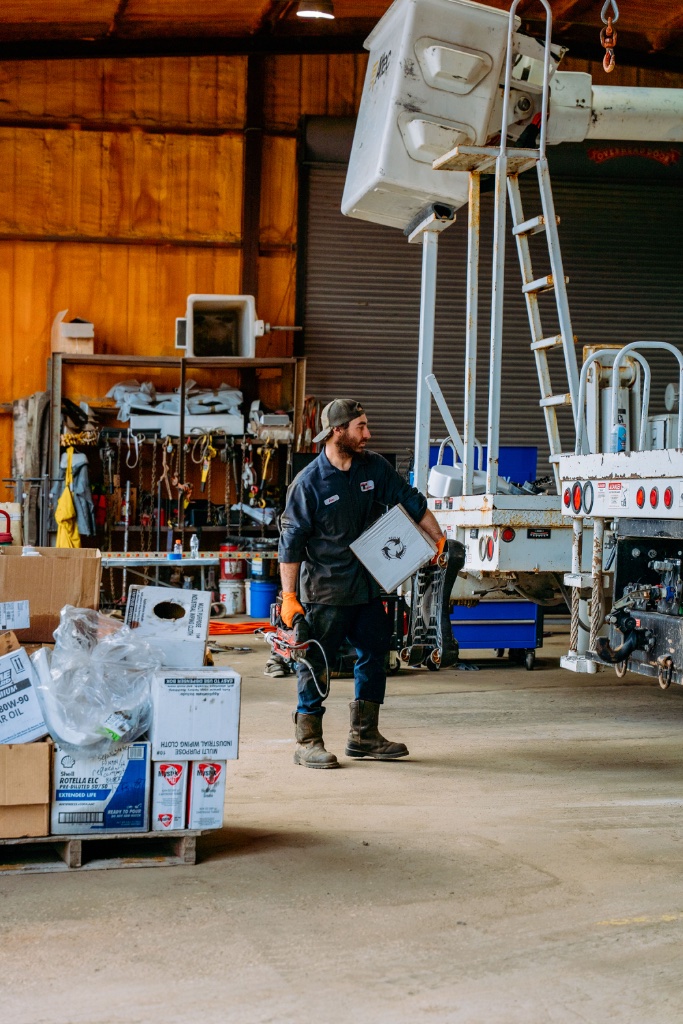
Complete, audit-ready documentation is a mandatory component of ANSI A92.2 compliance — not optional administrative work.
Why Dallas–Fort Worth Conditions Increase Inspection Failures
The DFW metroplex concentrates several environmental and operational factors that consistently elevate ANSI inspection bucket truck failure rates relative to fleets operating in more temperate or less intensive utility markets. Understanding these factors is essential for fleet managers planning inspection scheduling and preventive maintenance programs for mobile utility equipment inspection Texas operations in North Texas.
North Texas heat is the primary environmental driver of accelerated wear across all major bucket truck systems. Sustained ambient temperatures above 100°F from June through September, combined with direct solar loading on equipment operating in open right-of-way environments, elevate hydraulic fluid temperatures well above rated operating ranges, accelerate seal material degradation, and push electrical control enclosure temperatures beyond rated component limits. The thermal mechanisms described in the inspection failure sections above all operate at greater intensity in DFW conditions than in most other utility markets in the country.
High-duty industrial use patterns in the DFW metroplex add operational stress to thermal stress. The combination of Dallas's commercial infrastructure density, Fort Worth's industrial and energy sector activity, Arlington's manufacturing corridor, and Irving's commercial concentration creates utility equipment demand patterns that drive exceptionally high annual cycle counts for distribution maintenance and commercial interconnection work. Equipment that accumulates 2,000–3,000 boom cycles per month in heavy DFW distribution work degrades faster than equipment operating at half that cycle rate in lower-intensity markets.
Storm restoration wear following the DFW region's severe weather events — including the high-wind events, ice storms, and occasional tornado damage that affect the metroplex annually — creates concentrated high-intensity operating periods that compress normal wear cycles. Storm restoration work runs extended hours, drives maximum utilization across all boom systems, and often involves operating in challenging access conditions that increase structural loading beyond normal distribution work levels. Equipment that has completed a major storm restoration event in the DFW area should be treated as having experienced equivalent wear to months of normal operation.
Extended fleet operating hours during summer peak periods in the DFW market drive hydraulic thermal loads that compress component lifespan. Units operating continuous full-day shifts through July and August DFW peak heat accumulate thermal cycling damage that is not accounted for in standard maintenance interval calculations based on national averages. Bucket truck inspection Fort Worth TX and Dallas-area fleets operating through summer peak season require compressed maintenance intervals to match their actual operating environment.
Preventing ANSI Inspection Failures in Utility Fleets
The most reliable method to prevent ANSI inspection bucket truck failures — and the compliance, operational, and financial consequences they create — is a structured preventive maintenance program specifically calibrated to DFW operating conditions. Reactive maintenance, where equipment is serviced only when it fails or is approaching a scheduled certification date, consistently produces higher inspection failure rates and higher total fleet operating costs than proactive programs.
Preventive maintenance programs for DFW utility fleets should include quarterly hydraulic system service visits that address fluid condition, hose integrity, cylinder performance, and cooler function. In North Texas summer conditions, quarterly intervals are the minimum adequate to catch heat-accelerated wear before it progresses to inspection-failing condition. High-cycle units operating on intensive distribution maintenance routes in Dallas, Fort Worth, and Arlington may justify monthly service visits during June through September peak heat months.
Pre-inspection diagnostics — a dedicated service visit two to four weeks before the scheduled formal inspection date — allow deficiencies to be identified and corrected before the inspection rather than during it. Pre-inspection visits should evaluate all hydraulic system pressure and leak conditions, control system function under thermal load, structural articulation point condition, and documentation completeness. Deficiencies found and corrected before the formal inspection avoid the scheduling disruption and compliance gap created by an inspection failure and required re-inspection process.
Scheduled dielectric testing for DFW fleets should be aligned with the annual ANSI inspection in a single compliance event. Spring scheduling — before peak summer operating intensity — is optimal for North Texas fleets because it identifies insulation deficiencies before they are compounded by another summer season of UV and thermal degradation. Combining both certifications in a single service event minimizes fleet downtime relative to separate scheduling of each certification.
Compliance documentation systems should provide digital, date-stamped records for every service event, inspection, and certification. Fleet managers for utility fleet compliance DFW operations need to be able to produce current certification records on demand at any job site — a requirement that paper-based systems handle poorly. CRANETEC's documentation model provides digital records accessible from any location, with automated notification of approaching certification due dates to eliminate the scheduling gaps that create compliance exposure.
Fleet-level inspection tracking across multiple units operating in different locations across the DFW metroplex requires a systematic approach to certification due date management. Dallas fleets with units operating simultaneously in Dallas, Fort Worth, Arlington, and Irving need a centralized view of certification status that individual unit paper records cannot provide. CRANETEC's fleet service programs include due date tracking and proactive scheduling coordination as part of the program structure.
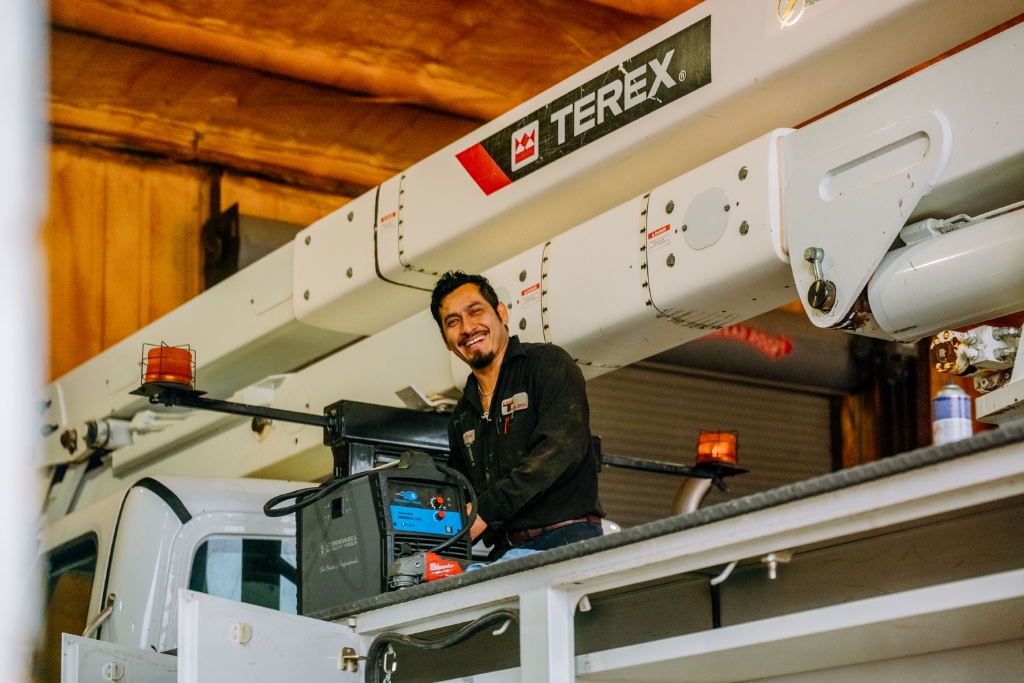
Pre-inspection hydraulic pressure diagnostics identify deficiencies before the formal certification event, preventing inspection failures and scheduling disruption.
Mobile ANSI & Dielectric Testing Across DFW
CRANETEC's mobile inspection model is designed for utility fleets operating across the geographic spread of the Dallas–Fort Worth metroplex. Rather than requiring equipment to be transported to a central facility for annual certification — a process that adds towing costs, transit time, and coordination complexity — our mobile inspection units bring the complete inspection and testing capability to your facility or job site across the entire DFW service area.
Mobile ANSI inspection bucket truck service for DFW fleets includes the complete A92.2 evaluation process, documentation generation, and deficiency reporting in a single on-site visit. When deficiencies are identified that require repair before certification can be issued, CRANETEC's ability to perform both inspection and repair work means the correction process begins immediately rather than requiring the unit to be dispatched to a separate repair facility.
Mobile dielectric testing bucket truck service carries the high-voltage test equipment required to perform compliant insulation integrity testing at your location across the DFW metroplex. Combined inspection and testing appointments — ANSI A92.2 inspection and dielectric testing in a single service event — represent the most efficient compliance approach for utility fleet compliance DFW operations, minimizing total fleet downtime while satisfying both certification requirements simultaneously.
Dallas, TX Bucket Truck Repair →
Mobile ANSI inspections and dielectric testing across Dallas County — distribution corridors, commercial infrastructure, and municipal utility operations.
Fort Worth, TX Bucket Truck Repair →
Complete compliance testing services for Tarrant County utility fleets — transmission construction, industrial utility, and distribution maintenance operations.
Arlington, TX Bucket Truck Repair →
Mobile inspection services across Arlington — centrally positioned between Dallas and Fort Worth for rapid response to compliance scheduling needs.
Irving, TX Bucket Truck Repair →
ANSI and dielectric compliance services for Irving and Las Colinas utility operations — covering the central DFW commercial and infrastructure corridor.
For the full scope of CRANETEC compliance and repair services, visit cranetec.net/services. For Texas-wide mobile utility equipment service information, see our Texas Utility Equipment Service overview. To schedule mobile inspections or discuss a fleet compliance program, contact us at cranetec.net/contact.
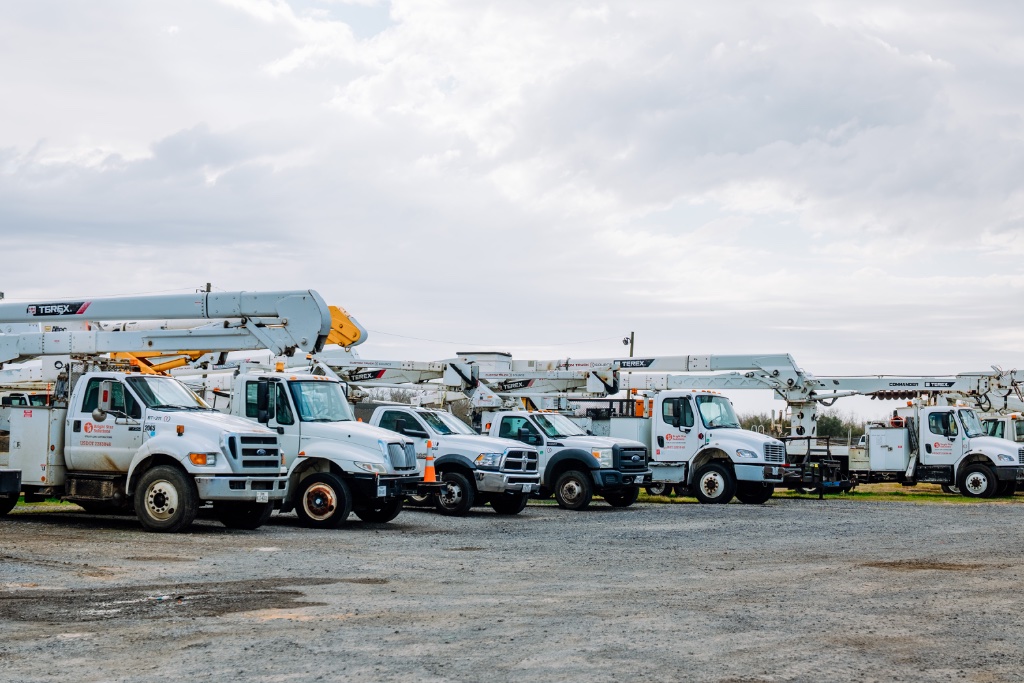
Mobile ANSI inspections are performed at your DFW facility or job site — no transport required for most aerial device configurations.
DFW Service Areas
CRANETEC provides mobile ANSI inspection bucket truck and dielectric testing services across the full DFW metroplex. Whether the service call originates from a utility fleet yard in Dallas, TX Bucket Truck Repair territory, a transmission contractor facility in Fort Worth, TX Bucket Truck Repair service area, a distribution maintenance operation in Arlington, TX Bucket Truck Repair coverage, or a commercial infrastructure project in Irving, TX Bucket Truck Repair range, CRANETEC mobile inspection units respond with the same technical capability and compliance documentation.
Our service model is built for fleets that operate across multiple DFW submarkets simultaneously. Single-event compliance scheduling — ANSI inspection and dielectric testing in one visit — is available across all four primary DFW city service areas, as well as extended coverage throughout Collin, Denton, Rockwall, and Johnson counties for contractors operating across the full metropolitan region.
ANSI Inspection Compliance Comparison: Proactive vs. Reactive Approach
| Metric | Proactive Program | Reactive Approach |
|---|---|---|
| Inspection failure rate | Below 10% (deficiencies corrected pre-inspection) | Above 40% for DFW summer-operated fleets |
| Compliance gap exposure | Minimal — certifications renewed ahead of expiry | Significant — lapses common during peak season |
| OSHA citation risk | Very low — audit-ready documentation maintained | High — documentation gaps and lapsed certifications |
| Annual compliance cost per unit | $1,200–$2,000 including pre-inspection prep | $3,500–$7,000+ including re-inspection and repair |
| Downtime per compliance event | 4–8 hours (combined ANSI + dielectric) | 2–5 days (failure + repair + re-inspection) |
| Documentation quality | Digital, complete, accessible | Paper-based, incomplete, difficult to produce on demand |
Frequently Asked Questions
What causes a bucket truck to fail an ANSI inspection?
The most common causes of ANSI inspection failure include hydraulic leaks and pressure instability, worn or cracked boom bushings, structural fatigue in load-bearing components, electrical control system malfunctions, failed dielectric insulation in the insulated boom sections, and missing or incomplete inspection and maintenance documentation. In the DFW region, heat-accelerated wear compounds these failure modes significantly, often pushing components past serviceable limits before standard maintenance intervals are reached.
How often is dielectric testing required for bucket trucks?
ANSI A92.2 requires dielectric testing at intervals specified by the manufacturer, or at minimum annually, for aerial devices operated in proximity to energized electrical conductors. OSHA Standard 1926.950 additionally mandates testing before initial deployment and after any event that may have compromised insulation integrity — including contact with an energized conductor, physical impact to an insulated section, or any repair involving the insulated boom. For DFW utility fleets, CRANETEC recommends scheduling dielectric testing in spring before peak summer operating intensity begins.
Can ANSI inspections be performed on-site at our facility?
Yes. CRANETEC performs mobile ANSI A92.2 inspections at your facility or job site across Dallas, Fort Worth, Arlington, Irving, and the greater DFW metroplex. Our mobile inspection units carry the diagnostic equipment, documentation tools, and technical reference materials required to conduct a complete inspection without requiring the unit to be transported to a shop. Mobile inspections can be combined with dielectric testing in a single compliance event to minimize fleet downtime.
What happens if a bucket truck fails inspection?
A bucket truck that fails an ANSI inspection must be removed from service immediately. The unit cannot be legally operated on job sites subject to OSHA regulation until the deficiencies are corrected and the unit is re-inspected and certified. Operating non-certified aerial equipment exposes the contractor to OSHA serious violation citations starting at $16,131 per instance, potential work stoppages, and significant liability exposure. CRANETEC can coordinate the inspection, deficiency repair, and re-certification in a single service sequence to minimize downtime impact.
How do I schedule a mobile bucket truck inspection in DFW?
Contact CRANETEC directly at (409) 752-5400 or through cranetec.net/contact to schedule mobile ANSI inspection and dielectric testing services across the DFW metroplex. We serve Dallas, Fort Worth, Arlington, Irving, and surrounding North Texas areas. Combined ANSI and dielectric testing appointments are available as a single compliance event.
What is the difference between an ANSI inspection and dielectric testing?
An ANSI A92.2 inspection evaluates the complete mechanical, structural, hydraulic, and safety system condition of an aerial work platform against the standard's requirements. Dielectric testing specifically evaluates the electrical insulation integrity of the insulated boom sections and bucket liner, measuring leakage current under rated voltage conditions to confirm the insulation provides specified protection against electrical arc hazard. Both certifications are required for aerial devices used near energized electrical infrastructure.
Schedule ANSI Inspection & Dielectric Testing for Your DFW Fleet
Mobile compliance services across Dallas, Fort Worth, Arlington, Irving, and the greater DFW metroplex. ANSI A92.2 inspections and dielectric testing combined in a single compliance event — dispatched to your facility.
CRANETEC provides ANSI inspection bucket truck services, dielectric testing bucket truck certification, bucket truck inspection Dallas TX, bucket truck inspection Fort Worth TX, and mobile utility equipment inspection Texas across the Dallas–Fort Worth metroplex and throughout Texas and Louisiana.