
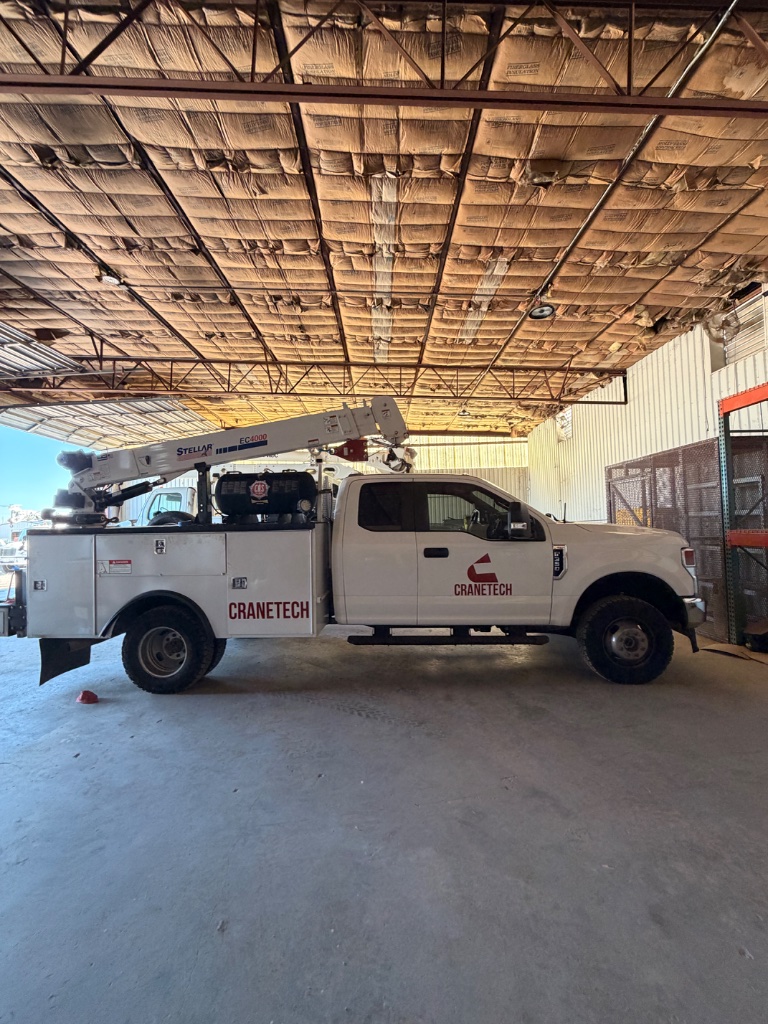
For utility contractors operating in Dallas, Fort Worth, Arlington, Irving, and the broader DFW metroplex, equipment uptime is not a luxury — it is an operational requirement. A single bucket truck taken out of service unexpectedly can halt a crew, delay a project, and trigger contractual penalties. Implementing a structured preventive maintenance bucket truck DFW program is the most reliable method to control costs, maintain compliance, and protect crew safety across your fleet.
This checklist was developed for fleet managers, utility contractors, and municipal equipment supervisors who need a practical, actionable framework — not a generic guide. It covers every major system, establishes inspection intervals, and outlines what CRANETEC's mobile technicians address during service calls across North Texas.
Why Preventive Maintenance Matters in North Texas
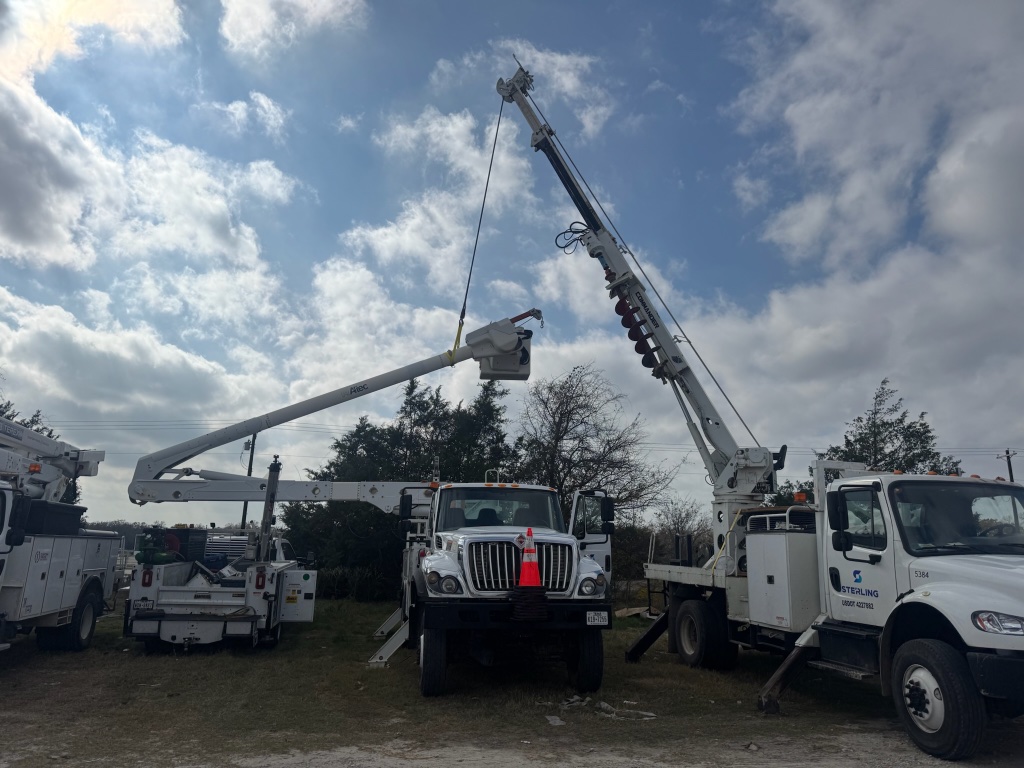
North Texas imposes some of the most demanding operating conditions for aerial equipment in the country. DFW utility fleets contend with a combination of environmental, operational, and regulatory stressors that accelerate wear rates and compress inspection windows.
Extreme heat. Dallas and Fort Worth regularly exceed 100°F from June through September. Hydraulic fluid degrades faster at elevated temperatures, accelerating seal wear, increasing pump cavitation risk, and reducing system pressure consistency. Equipment operated without temperature-appropriate fluid management will experience premature component failure.
High duty cycles. DFW's rapid infrastructure growth means utility fleets are logging more hours per unit per year than the national average. High-cycle equipment requires shorter inspection intervals, not the same intervals applied to lighter-use machines.
Storm response demand. North Texas severe weather — including ice storms, derechos, and tornado events — places sudden, high-intensity demand on equipment that may already be at or near service thresholds. Fleets that maintain proactive service schedules respond faster and with fewer mechanical failures during emergency deployment.
Compliance exposure. OSHA and ANSI A92.2 requirements apply regardless of operational pressure. Equipment that fails a formal inspection in the DFW market faces mandatory downtime, potential citation, and in some cases, insurance implications. A preventive maintenance bucket truck DFW program is a direct compliance risk management tool.
Comprehensive Preventive Maintenance Checklist
The following checklist represents the minimum scope of a full-cycle preventive maintenance bucket truck DFW service. Each category should be documented, dated, and signed by the performing technician. Records must be retained and accessible for ANSI inspection review.
1Hydraulic System Inspection
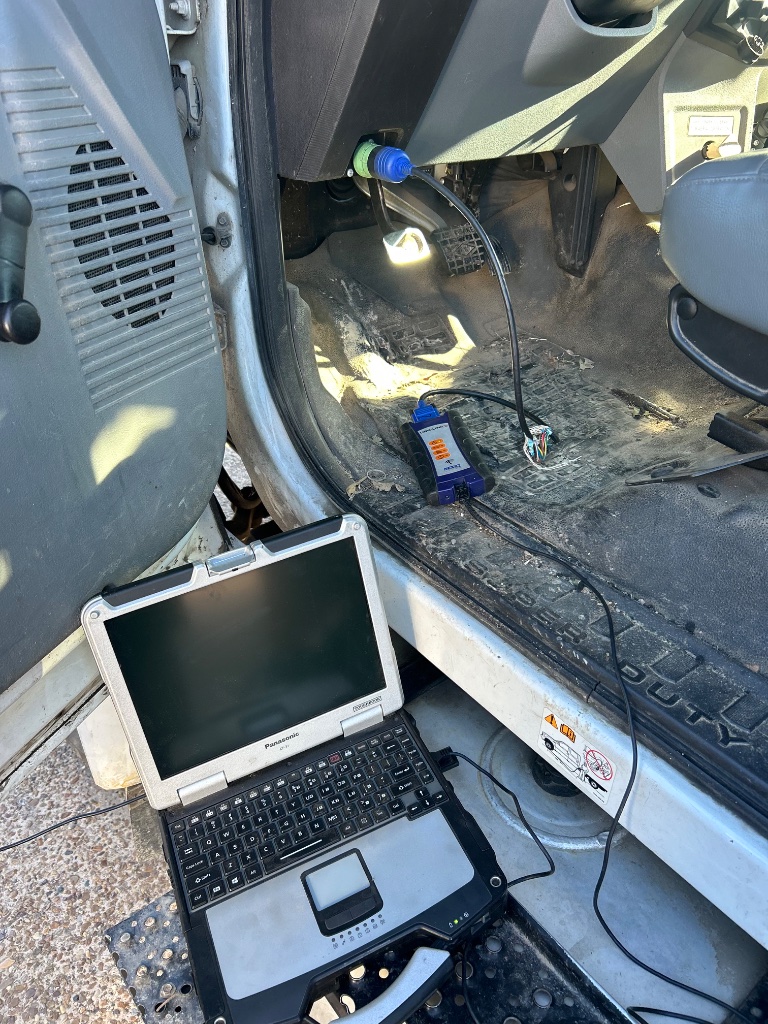
The hydraulic system is the highest-failure subsystem in bucket truck operations. Hydraulic system inspection Fort Worth TX service calls consistently cite hose degradation and fluid contamination as leading causes of unplanned downtime.
- Inspect all hydraulic hoses for cracking, abrasion, swelling, or fitting corrosion — replace any hose showing external damage
- Conduct hydraulic pressure testing at all major circuit points; document readings against manufacturer specifications
- Pull fluid sample for contamination analysis — check for water ingress, metal particulate, and viscosity degradation
- Evaluate pump performance under load — test for pressure drop, noise anomalies, and response lag
- Inspect all cylinders for rod scoring, seal weeping, and end cap integrity
- Verify reservoir fluid level and check breather cap condition
- Test all control valve functions for response, centering, and leakage
- Check all hydraulic fittings for torque and thread integrity
2Structural and Boom Components
Structural integrity failures are among the most serious — and most preventable — safety events in aerial work. North Texas heat cycles and high-vibration roadway conditions accelerate fatigue at weld joints and pivot points.
- Inspect all bushings for wear beyond manufacturer tolerances — measure bore diameter against spec
- Check all pivot pins for corrosion, scoring, or elongation; re-grease or replace as required
- Torque-check all mounting hardware on turntable, lower boom, and upper boom sections
- Conduct visual and tactile weld inspection on all boom section joints, turntable base, and pedestal welds
- Inspect fiberglass liner sections (if applicable) for cracks, delamination, or contamination
- Check upper and lower boom rest pads and stop blocks for wear
- Verify all access covers, panels, and guards are secure and undamaged
3Electrical and Control Systems
- Test all upper and lower control station switches for proper function and positive engagement
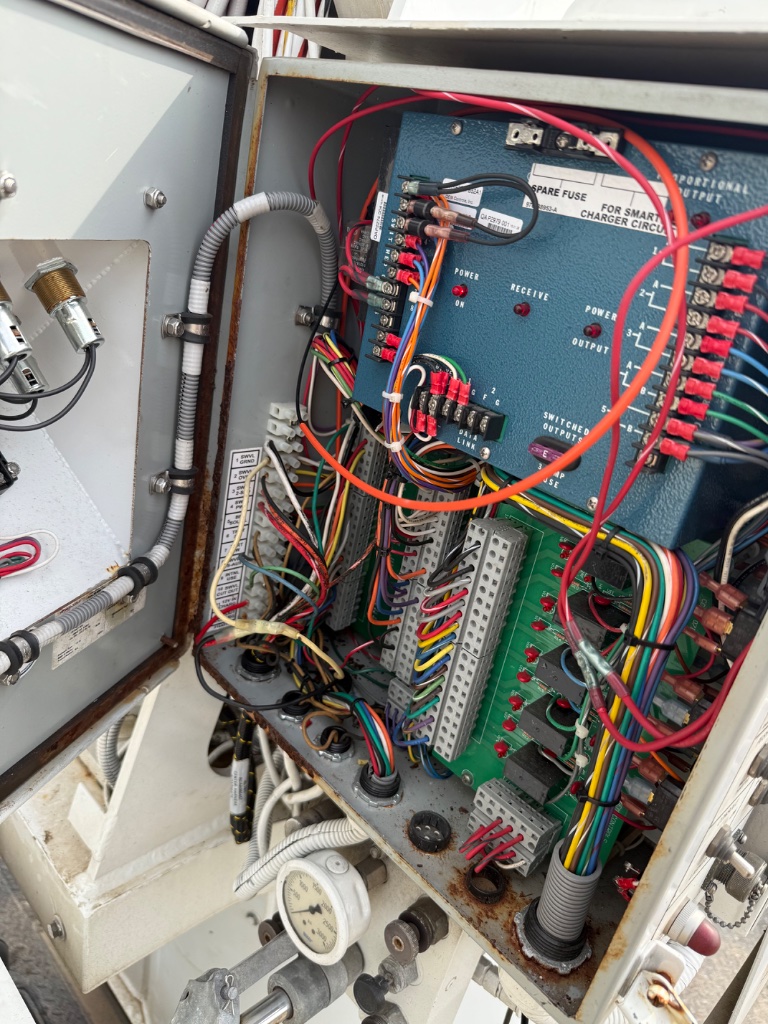
- Inspect all wiring harnesses for chafing, heat damage, connector corrosion, and secure routing
- Run full sensor diagnostic on any installed telematics, overload protection, or load monitoring systems
- Verify emergency stop function from all control positions
- Test interlock systems — rotation limiters, platform level indicators, outrigger interlocks
- Check battery terminals, charging system, and any auxiliary power unit (APU) function
4Dielectric Testing Schedule
ANSI A92.2 requires dielectric testing at intervals not to exceed 12 months for equipment used in proximity to energized lines. Given the volume of live-line work across Dallas and Fort Worth, a dielectric testing schedule DFW program should treat the annual maximum as a baseline, not a standard.
- Test insulation integrity of all boom liner sections at rated voltage — document pass/fail with test equipment calibration records
- Measure leakage current and compare to ANSI A92.2 maximum allowable limits
- Inspect all liner sections visually prior to electrical testing for contamination, cracks, or moisture ingress
- Clean and dry liner sections before testing — contaminated surfaces produce false readings
- Issue dielectric test certification with equipment serial number, test date, technician credential, and next test due date
- Maintain testing records on-unit and in fleet management documentation
5ANSI Inspection Preparation
ANSI inspection preparation Texas is most effective when treated as a continuous process rather than a pre-inspection scramble. The items below represent the most frequent failure points identified in DFW-area bucket truck inspections.
- Verify all safety decals are present, legible, and correctly positioned — replace any faded, damaged, or missing decals
- Test all outrigger functions: full extension, retraction, pad deployment, and interlock engagement
- Verify emergency lowering system operates correctly from ground level — test both manual and powered modes
- Confirm rated load capacity placard is posted, accurate, and undamaged
- Review and update maintenance log, ensuring all prior service entries are complete and signed
- Verify annual inspection certificate is current — schedule renewal if within 60 days of expiration
- Confirm operator manuals are present in the unit
Seasonal Maintenance Planning for DFW Fleets
Effective utility fleet maintenance Dallas TX programs are not year-round static schedules — they are calibrated to the operational calendar and regional climate. North Texas presents distinct seasonal risk windows that should drive scheduling decisions.
Pre-Summer (April–May)
- Flush and replace hydraulic fluid with summer-grade formulation
- Inspect all seals and cylinder rods for heat-season readiness
- Verify cooling system on any engine-driven hydraulic units
- Check dielectric liner condition before peak-season live-line work
Post-Storm Evaluation
- Inspect booms for impact damage, particularly after hail events
- Check all electrical connections for moisture intrusion
- Test dielectric integrity if unit was exposed to flooding or heavy rain
- Review structural welds and mounting points for stress from high-wind operations
Annual Compliance Review (Q4)
- Schedule ANSI A92.2 formal inspection for all fleet units
- Renew dielectric testing certifications approaching expiration
- Update operator documentation and training records
- Conduct lifecycle review — identify units approaching high-cost repair thresholds
Fleet-Wide Scheduling Strategy
- Stagger PM intervals across the fleet to avoid simultaneous downtime
- Coordinate service windows with project scheduling to minimize crew impact
- Use mobile service to complete routine inspections during planned shift gaps
- Build 30/60/90-day maintenance calendars for each unit in the fleet
Cost Comparison — Preventive vs Emergency Repairs
The financial case for preventive maintenance bucket truck DFW programs is quantifiable. The table below reflects realistic cost ranges observed in the DFW market for common failure scenarios versus their preventive counterparts.
| Component / System | Preventive Maintenance | Emergency Breakdown | Cost Delta |
|---|---|---|---|
| Hydraulic Hose | Scheduled replacement: $150–$400 | Pump failure from hose failure: $2,500–$6,000 | 6–15x |
| Hydraulic Seals | Seal replacement during PM: $200–$600 | Full cylinder rebuild: $1,800–$4,500 | 5–8x |
| Dielectric Test | Scheduled test: $350–$600 | Failed inspection + downtime: $3,000–$8,000+ | 8–13x |
| Electrical Connector | Preventive inspection & repair: $100–$300 | Control system failure mid-job: $1,500–$4,000 | 5–10x |
| Boom Bushing | Scheduled replacement: $300–$700 | Structural wear event + inspection: $4,000–$9,000 | 8–12x |
| Outrigger Pad | Replacement during PM: $150–$350 | Stability event + OSHA review: $5,000–$20,000+ | 15–50x |
Cost ranges are based on DFW market service data. Emergency figures include parts, after-hours labor, and estimated production downtime. Actual costs vary by unit make, model, and failure extent.
Mobile Preventive Maintenance Across DFW
CRANETEC's mobile utility equipment maintenance DFW model eliminates the primary barrier to consistent preventive maintenance: logistics. Most utility fleets operating in Dallas, Fort Worth, Arlington, and Irving cannot afford to transport multiple units to a fixed service facility and wait. Our mobile units bring the full scope of preventive maintenance bucket truck DFW services to your location.
Each service unit carries hydraulic diagnostic equipment, hose fabrication tools for same-day custom hose replacement, dielectric testing apparatus, structural inspection tools, and all documentation systems required to produce certifiable service records on-site.
We serve fleet yards, active job sites, municipal depots, and utility substations across the metroplex. Service is available Monday through Saturday with emergency response available 24/7 for urgent mechanical issues.
CRANETEC currently provides bucket truck compliance checklist services and mobile maintenance across the following DFW communities and surrounding areas:
DFW Service Areas
CRANETEC provides mobile utility equipment maintenance DFW services throughout the Dallas–Fort Worth metroplex. Utility contractors, municipalities, and powerline companies operating in Dallas, Fort Worth, Arlington, and Irving receive the same scope of service, response times, and technical capability.
Whether your fleet operates along the I-35W corridor in Fort Worth, the Highway 183 industrial zones in Irving, the I-20 utility right-of-ways in Arlington, or the dense commercial districts in Dallas, CRANETEC's mobile technicians are positioned to respond efficiently. Our bucket truck inspection checklist Texas service is calibrated for the specific regulatory environment, climate conditions, and equipment types common to DFW utility operations.
Frequently Asked Questions
How often should bucket trucks be inspected in Texas?
Under ANSI A92.2 standards, bucket trucks require a formal annual inspection by a qualified person. However, operators must conduct daily pre-use inspections before every shift. In high-duty environments like DFW utility fleets, quarterly hydraulic system checks and semi-annual dielectric testing are also strongly recommended to maintain compliance and catch wear before failures occur.
What is included in a preventive maintenance program for bucket trucks?
A comprehensive preventive maintenance program covers hydraulic system inspection (hoses, pump, cylinders, fluid), structural checks (boom, bushings, pivot pins, welds), electrical and control system testing, dielectric testing, ANSI inspection preparation, outrigger function checks, and documentation review. CRANETEC provides all of these services on-site across DFW.
Does preventive maintenance reduce ANSI inspection failures?
Yes. The majority of ANSI inspection failures in the DFW area stem from deferred maintenance — worn hoses, degraded insulation, malfunctioning emergency systems, and missing documentation. A structured preventive maintenance program addresses each of these deficiencies before the formal inspection, significantly reducing failure rates and the associated downtime costs.
Can preventive maintenance be performed on-site at our facility?
Yes. CRANETEC operates fully equipped mobile service units throughout Dallas, Fort Worth, Arlington, Irving, and the greater DFW metroplex. Our technicians bring diagnostic equipment, hydraulic hose fabrication tools, and testing apparatus directly to your yard or job site, eliminating transport time and keeping your fleet operational.
How do I schedule fleet-wide preventive maintenance in DFW?
Contact CRANETEC directly at (409) 752-5400 or through our contact page. We work with fleet managers to build custom maintenance schedules that minimize disruption to operations. We can coordinate staggered inspections across multiple units or complete fleet-wide service during planned downtime windows.
What is the cost difference between preventive maintenance and emergency repairs?
The cost gap is significant. A scheduled hydraulic hose replacement typically runs $150–$400. An emergency hydraulic pump failure caused by undetected hose degradation can cost $2,500–$6,000 in parts and labor, plus production downtime. Preventive maintenance programs consistently deliver 3:1 to 5:1 returns on investment for DFW utility fleets.
Schedule Mobile Preventive Maintenance for Your DFW Fleet
CRANETEC provides on-site preventive maintenance, hydraulic inspection, dielectric testing, and ANSI inspection preparation across Dallas, Fort Worth, Arlington, Irving, and the greater DFW metroplex. Contact our team to build a maintenance schedule for your fleet.